If you put off wisdom tooth removal in your late teens, you are not alone. Plenty of adults reach their 30s, 40s, or later with third molars still sitting in the jaw, causing no trouble at all, until they suddenly do.
Looking at wisdom tooth removal by age helps explain why root development, jawbone density, and how close the roots sit to a major nerve can affect how a surgeon plans the procedure.
None of this means you are too old for care, but it does mean your evaluation at 45 should look different from one at 25.
This guide compares what changes at each age bracket and explains how a dentist or oral surgeon decides whether removal or watchful monitoring is the safer path for your specific mouth.
Key Takeaways
- Wisdom tooth removal gets more surgically complex with age, but it stays a safe, common procedure well into your 40s and beyond.
- Root position, bone density, and nerve location (not birthdays alone) determine how straightforward your extraction will be.
- Symptoms like pain, swelling, or recurring infection are stronger reasons to act than age alone.
What Changes at Ages 25, 35, and 45?
Age affects wisdom tooth removal mainly through three things: how fully the roots have formed, how dense the jawbone has become, and how close the tooth sits to the nerve that runs through the lower jaw.
These factors shape surgical complexity, recovery time, and the risk of complications like nerve irritation or prolonged jaw stiffness.

At 25: Often Still a Straightforward Procedure
At 25, root development is usually complete but not yet as dense or curved as it becomes later.
Many dental professionals still consider the mid-20s a workable window for extraction, since bone remains somewhat pliable compared to later decades.
If your wisdom teeth are erupting normally or only mildly impacted, this age group often sees shorter procedures and quicker healing.
At 35: Fully Formed Roots and Denser Bone
By 35, wisdom tooth roots are fully formed, and they can be longer, thicker, or curved in ways that make extraction more involved.
Jawbone density has also increased, which means an oral surgeon may need to remove more bone or section the tooth into pieces to extract it safely.
This does not make the surgery unsafe. It does mean the appointment often takes longer and recovery may stretch out a few extra days.
At 45 and Beyond: A More Individualized Risk-Benefit Decision
At 45 and older, removal becomes a more individualized decision that weighs the benefits of extraction against a longer healing time and, in some cases, medical factors like blood thinners or diabetes.
By this stage, the jawbone may be denser than it was in early adulthood, which can make extraction more involved in some patients.
Extraction after 30, 40, or even 50 is considered safe by many oral surgeons, though healing may take longer.
Why Root Development, Bone Density, and Nerve Location Matter
These three factors determine surgical complexity more than age itself.
Fully formed roots can curve around the nerve canal, denser bone requires more careful surgical technique, and a tooth’s exact position affects how much bone removal or tooth sectioning is needed.
A surgeon reviewing your imaging is checking all three before recommending a plan, not just noting your birth year.
| Factor | Younger Adults (Around 25) | Older Adults (35 to 45+) |
| Root development | Often complete, less curved | Fully formed, may curve near nerve |
| Bone density | Moderate | Higher, denser bone |
| Typical surgical complexity | Lower | Higher, more sectioning likely |
| Nerve proximity risk | Lower on average | Can be higher depending on position |
| Recovery pace | Often faster | Often longer, more swelling |
When Should an Adult Wisdom Tooth Be Removed?
An adult wisdom tooth should be removed when it causes pain, infection, damage to nearby teeth, or when imaging shows a cyst or other concerning change.
Understanding when tooth extraction is necessary can also help you recognize why some teeth need treatment while others can be monitored.
Not every wisdom tooth needs to come out, especially one that is fully erupted, properly positioned, and easy to clean.
Symptoms That Need a Dental Evaluation
Certain symptoms are worth a prompt visit to your dentist or an oral surgeon.
Pericoronitis, an infection of the gum tissue around a partially erupted tooth, is one of the more common reasons adults suddenly need attention after years of no problems.
Watch for these signs:
- Swelling or tenderness at the back of the jaw
- Bad breath or an unpleasant taste that will not go away
- Jaw pain or stiffness when opening your mouth wide
- Recurring gum infections in the same spot
- Visible decay or a shifting bite near the back molars
Hidden Damage an X-Ray Can Reveal
A dental x-ray can reveal damage long before you feel it. Impacted wisdom teeth (teeth trapped fully or partially under gum or bone) can press against the adjacent second molar, wearing away its root through a process called root resorption.
Left unchecked, this can lead to bone loss or eventual tooth loss in a tooth you were not even worried about.
Imaging can also catch a dentigerous cyst, a fluid-filled sac that can form around an unerupted tooth and slowly damage surrounding bone.
These cysts are uncommon but serious enough that the American Association of Oral and Maxillofacial Surgeons recommends monitoring wisdom teeth even when they are not causing symptoms.
When Monitoring Is Safer Than Preventive Extraction
Monitoring is often the better choice when a wisdom tooth is fully erupted, properly aligned, and free of decay or gum disease. Some adults keep healthy, functional wisdom teeth for life with no issues at all.
Your dentist can track tooth position and bone health over time with periodic x-rays and routine dental visits, stepping in only if something changes.
Knowing how often you should get a dental cleaning can also help you stay consistent with preventive care while your wisdom teeth are being monitored.
If you are exploring your options, learning more about wisdom teeth extraction can help you understand what a future procedure might involve if monitoring shows a change down the road.
How Do Surgeons Plan a Safe Extraction?
Surgeons plan a safe extraction by reviewing imaging first, mapping out tooth position and nerve location, then choosing a surgical approach and sedation option suited to your case.
This planning stage matters more as roots and bone density increase with age, since it helps the surgical team avoid the inferior alveolar nerve and minimize bone removal.
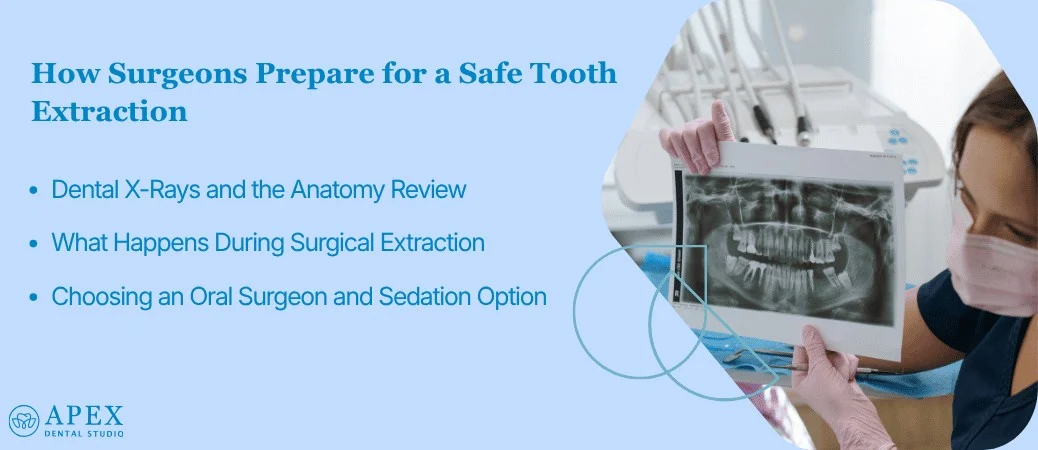
Dental X-Rays and the Anatomy Review
A panoramic x-ray gives your oral surgeon a full view of both jaws in one image, showing root shape, tooth angle, and how close the roots sit to the nerve canal.
Imaging is especially important for adults with fully formed roots because it helps the dental team evaluate root shape, tooth position, and nearby anatomy before treatment.
If you have questions about what your imaging shows, ask your provider to walk through it with you before scheduling surgery.
What Happens During Surgical Extraction
A surgical extraction for an impacted tooth often involves a small incision in the gum, some bone removal, and tooth sectioning (splitting the tooth into smaller pieces) to remove it without unnecessary trauma to the surrounding bone.
If you’re worried about discomfort, understanding whether tooth extraction hurts can help you know what to expect during and after the procedure.
The procedure at Apex Dental Studio typically follows this same careful, image-guided approach regardless of a patient’s age.
Choosing an Oral Surgeon and Sedation Option
An oral and maxillofacial surgeon has 4 to 6 years of hospital-based surgical training beyond dental school, which becomes especially relevant for adults with impacted teeth or nerve proximity concerns.
Sedation options range from local anesthesia alone to IV sedation or general anesthesia for more complex cases or anxious patients.
If anxiety is making you hesitant about treatment, learning about sedation dentistry for dental anxiety can help you understand your comfort options before the procedure.
Your provider can then recommend an approach based on your treatment needs and comfort level.
Learning more about oral surgery options ahead of your consultation can make that conversation easier.
What Does Recovery Look Like at Different Ages?
Recovery generally takes longer for adults with denser bone and more complex extractions, though the basic healing process stays the same at any age.
The first days focus on protecting the healing site, and the following week focuses on managing swelling and easing back into normal activity.
The First 24 Hours: Protecting the Blood Clot
Your top job in the first 24 hours is protecting the blood clot that forms in the socket.
This clot shields the bone and nerve endings underneath, and losing it too early can lead to dry socket, a painful condition where the bone is left exposed.
Skip straws, smoking, and vigorous rinsing during this window, and use cold compresses on your cheek to help control facial swelling.
The First Week: Swelling, Food, and Activity
Swelling typically peaks around 48 to 72 hours after surgery. Stick to soft foods, keep up gentle oral hygiene around the extraction site, and expect some jaw stiffness for several days as the tissue heals.
Most adults return to work or school within 3 to 5 days, though older adults with more complex extractions sometimes need extra rest.
When to Call the Dental Office
Call your dental office if you notice worsening pain after day 3, a fever, pus, or numbness that does not improve. These can be signs of gum infections, dry socket, or nerve irritation that need prompt attention.
If you had a bone graft placed at the extraction site, follow your surgeon’s specific instructions closely, since graft sites need extra protection during early healing.
A guide to the tooth removal healing timeline can help you track your own progress day by day.
Choosing Care Based on Your Oral Health
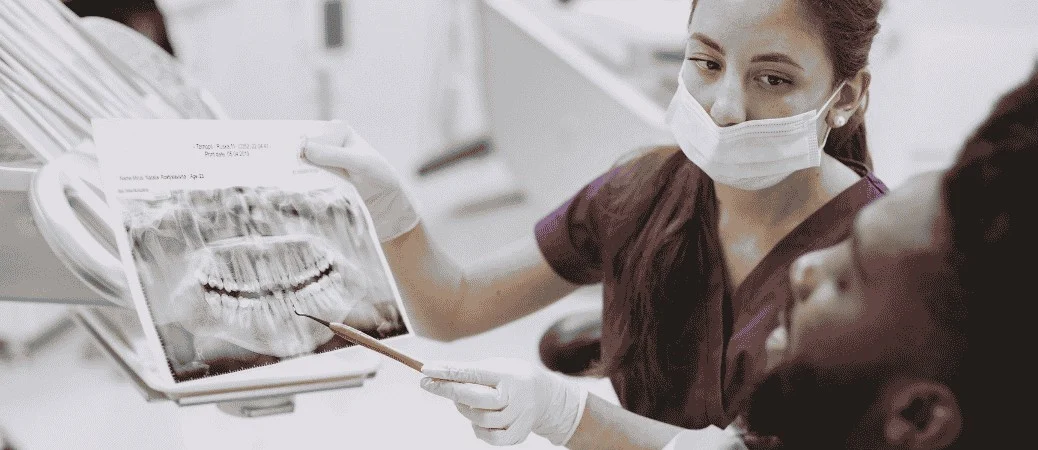
The right choice for your wisdom teeth depends on your imaging, symptoms, and overall oral health, not your age alone.
A tooth that is impacted, infected, or pressing on a neighboring tooth may be a stronger reason for wisdom tooth removal than age alone.
A tooth sitting quietly in a good position, with healthy bone density around it, may be fine to leave alone with regular monitoring.
Bring your full history to the conversation. Past gum disease, previous extractions, and any ongoing jaw pain all help your oral surgeon build an accurate picture of your risk.
If you’re unsure where to start, Dr. Andy Tran, DMD, MBA, at Apex Dental Studio can evaluate your wisdom teeth, review your imaging, and discuss whether removal or continued monitoring makes sense for your situation.
Frequently Asked Questions
Is 35 too old to have wisdom teeth removed?
No, 35 is not too old for wisdom tooth removal. Roots are fully formed and bone is denser by this age, which can make the surgery a bit more involved, but the procedure remains routine and safe for most healthy adults.
Is wisdom tooth removal harder at 45 than at 25?
Wisdom tooth extraction is often more surgically complex at 45 than at 25 because of denser bone and fully developed roots.
Recovery can also take longer, though healthy adults in their 40s and beyond regularly have the procedure done safely with proper planning.
Can I keep wisdom teeth if they do not hurt?
Yes, you can often keep wisdom teeth that are fully erupted, well positioned, and free of decay or infection, even without symptoms.
Your dentist should still monitor them with periodic x-rays, since impacted wisdom teeth can cause hidden damage before pain ever develops.
How long does recovery take after wisdom tooth extraction as an adult?
Most adults return to normal activity within 3 to 5 days, though swelling often peaks around 48 to 72 hours after surgery. Adults with more complex extractions or denser bones sometimes need a few extra days of rest and soft foods.
When should an adult see an oral surgeon for wisdom teeth?
See an oral surgeon if you have pain, swelling, recurring infection, or if imaging shows an impacted tooth, cyst, or roots close to a nerve.
An oral surgeon has specialized training for these more complex cases and can also advise on sedation options if you feel anxious about the procedure.