
You’ve probably heard the standard advice to visit the dentist twice a year, but is that rule really right for everyone?
The truth is that how often you need a dental cleaning depends on your individual oral health needs and risk factors.
While most people benefit from professional teeth cleaning every six months, some may need to go more or less frequently based on their specific situation.
Your dental cleaning schedule isn’t one-size-fits-all. Factors like your history of gum disease, whether you smoke, and even conditions like diabetes can all affect how often you should see your dentist.
Understanding what influences your personal needs can help you maintain better oral health and avoid unnecessary appointments or gaps in care.
Getting regular professional teeth cleanings does more than just make your smile look brighter.
These visits help catch problems early, remove buildup that brushing alone can’t handle, and protect you from costly dental work down the road. Let’s break down what you really need to know about dental cleaning frequency.
Key Takeaways
- Most people should get dental cleanings every six months, but your personal needs may vary based on health factors
- Professional teeth cleaning removes plaque and tartar that regular brushing and flossing cannot eliminate
- Signs like bleeding gums, persistent bad breath or other common dental problems may mean you need more frequent dental visits
Table of Content
- Recommended Frequency for Dental Cleanings
- Factors That Influence Your Dental Cleaning Schedule
- What Happens During a Professional Teeth Cleaning
- Recognizing Signs You May Need More Frequent Cleanings
- Long-Term Benefits and Preventive Impact of Regular Dental Cleanings
- Frequently Asked Questions
Recommended Frequency for Dental Cleanings
Most people benefit from professional dental cleanings twice a year, though your personal schedule depends on your age, health status, and risk factors for oral disease.
The standard six-month interval works well for many patients, but children, seniors, and those with certain health conditions may need adjusted schedules.
General Guidelines for Adults
The American Dental Association recommends visiting a dentist regularly for cleanings, with most adults benefiting from appointments every six months.
This cleaning frequency allows your dentist to remove plaque and tartar that daily brushing can’t eliminate.
Your dental cleaning schedule should include a comprehensive dental exam alongside the cleaning itself. During these visits, your dental professional checks for cavities, gum disease, and other oral health issues.
However, the traditional six-month standard isn’t set in stone.
Recent research suggests that people who visit twice per year don’t necessarily improve their dental outcomes in a statistically significant way compared to those who go less often.
Your ideal schedule should be determined through conversation with your dentist based on your specific needs.
Most healthy adults can maintain good oral health with annual or twice-yearly cleanings. But you’ll need to practice good dental hygiene between visits by brushing twice daily and flossing once per day.
Cleaning Schedules for Children and Seniors
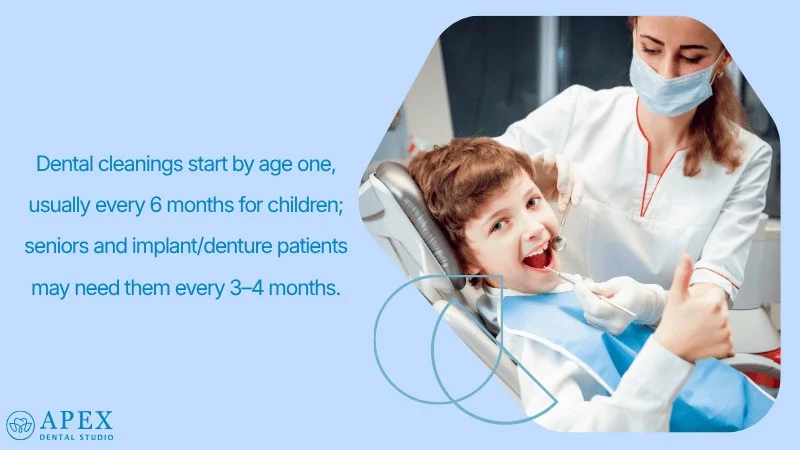
Children should begin professional dental cleanings when their first tooth appears or by their first birthday. Young children typically need dental check-ups every six months to monitor tooth development and prevent cavities.
Kids with a higher risk of tooth decay may need more frequent visits. Your pediatric dentist will recommend the right schedule based on your child’s oral health.
Seniors often require more frequent cleanings than younger adults. As you age, you face increased risks for gum disease, dry mouth, and tooth decay.
Many older adults benefit from cleanings every three to four months rather than the standard six-month interval.
If you wear dentures or have dental implants, your dentist may adjust your cleaning schedule. These dental devices require special care and monitoring to prevent complications.
Cleaning Frequency for High-Risk Groups
You may need cleaning every three to four months if you have certain risk factors. People with diabetes face higher risks for gum disease and should see their dentist more often.
High-risk factors that require more frequent cleanings include:
- Smoking or tobacco use
- Family history of gum disease
- Current gum disease or periodontitis
- Weakened immune system
- Pregnancy
- Heart disease
If you have braces or other orthodontic appliances, you’ll likely need more frequent cleanings since these devices trap food and plaque. Your orthodontist and dentist will work together to determine the best schedule.
Talk with your dentist about your medical history and lifestyle habits. They can help you find the dental cleaning frequency that keeps your teeth and gums healthy while fitting your budget and schedule.


Factors That Influence Your Dental Cleaning Schedule
Your cleaning schedule depends on several personal factors that affect your oral health.
Risk factors for gum disease, your medical history, daily habits, and whether you wear dental appliances all play a role in determining how often you should visit the dentist.
Individual Risk Factors for Gum Disease
Some people face higher risks for developing gum disease than others. If you have a family history of gum disease, you’re more likely to develop it yourself.
Smoking significantly increases your risk and may require you to get cleanings every three to four months instead of every six months. Your dentist will look at your specific risk factors to create a personalized schedule.
Age also matters when it comes to oral health. As you get older, you may experience changes in your gums and teeth that require more frequent monitoring.
Pregnant women often need more frequent dental cleanings because hormonal changes can affect gum health.
If you already have signs of gum disease, your dentist might recommend visits every three months to prevent the condition from getting worse.
Medical Conditions and Medications
Diabetes affects your entire body, including your mouth. People with diabetes need more frequent cleanings because high blood sugar levels make it harder to fight infections in your gums.
Other conditions that impact your cleaning schedule include:
- Weak immune system
- Heart disease
- Cancer treatment
- Autoimmune disorders
Certain medications cause dry mouth, which reduces saliva flow. Saliva helps wash away bacteria and food particles throughout the day. Without enough saliva, you’re at higher risk for cavities and gum problems.
If you take medications for blood pressure, depression, or allergies, let your dentist know. They can adjust your cleaning schedule based on how these medications affect your oral health.
Some people with these conditions benefit from cleanings every three to four months.
Lifestyle and Oral Hygiene Habits
Your daily routine directly impacts how often you need professional cleanings. Brushing twice a day and flossing daily remove plaque before it hardens into tartar.
If you struggle with your oral hygiene habits, you might need more frequent visits.
Your dentist can show you proper techniques and recommend tools like a water flosser or interdental brushes to clean hard-to-reach areas between your teeth.
Your diet also matters. Sugary foods and drinks increase plaque buildup. If you consume a lot of sugar or acidic beverages, talk to your dentist about whether you need more frequent cleanings.
People who maintain excellent oral hygiene habits and have no signs of gum disease might only need cleanings once a year. However, most people do best with the standard six-month schedule.
Dental Appliances and Orthodontics
Wearing dental appliances changes your cleaning needs. Braces, retainers, bridges, and dentures create extra spaces where plaque and bacteria can hide.
If you have braces, you’ll probably need cleanings every three to four months. The brackets and wires make it harder to brush and floss effectively, even when you’re careful.
Your orthodontist and dentist will work together to keep your teeth healthy during treatment.
Permanent dental work like bridges or implants requires special attention. These appliances need thorough cleaning around the base and underneath to prevent gum disease.
People with extensive dental work often benefit from more frequent professional cleanings to maintain their investment and oral health.
Removable appliances like dentures or retainers should be cleaned daily at home, but you still need regular dental visits to check the health of your gums and any remaining natural teeth.
What Happens During a Professional Teeth Cleaning
A professional teeth cleaning involves several steps that work together to remove buildup and protect your oral health.
Your dental hygienist will examine your mouth, remove plaque and tartar, polish your teeth, and may apply fluoride to strengthen enamel.

Initial Examination and Dental X-Rays
Your dental hygienist starts by examining your mouth with a small mirror to check for signs of gum disease or other problems. They look at your teeth, gums, and the spaces between them to spot any concerns.
Dental x-rays may be taken before the cleaning begins. These images help your dentist see what’s happening beneath your gum line and between your teeth.
X-rays can reveal cavities, bone loss, or other issues that aren’t visible during a visual exam.
This initial check lets your hygienist plan the best approach for your cleaning. If they notice heavy tartar buildup or signs of gum disease, they might recommend a deeper cleaning called scaling and root planing.
Scaling and Removing Tartar
Scaling removes plaque and tartar that have built up on your teeth surfaces and along the gum line. Your hygienist uses special tools to scrape away these deposits. You might hear scraping sounds during this step.
Plaque is a sticky film of bacteria that forms on your teeth daily. When you don’t brush and floss regularly, plaque hardens into tartar. Once tartar forms, you can’t remove it at home with regular brushing.
The amount of time spent on scaling depends on how much buildup you have. If you have tartar buildup in hard-to-reach areas, this step takes longer.
People with gum disease may need scaling and root planing, which cleans deeper below the gum line.
Polishing and Flossing
After removing all the tartar, your hygienist polishes your teeth with a gritty toothpaste and a rotating brush. This polish removes surface stains and makes your teeth feel smooth and clean.
The gritty texture helps scrub away any remaining plaque or debris. Your hygienist then flosses between all your teeth to remove particles loosened during cleaning. This step shows you the proper flossing technique too.
Even if you floss at home, professional flossing gets deeper between teeth and along the gum line. Your hygienist can reach spots you might miss when you brush and floss on your own.
Fluoride Treatment and Preventive Care
The final step often includes a fluoride treatment to strengthen your tooth enamel. Your hygienist applies a fluoride gel or foam to your teeth using a tray that you bite down on for about a minute.
Benefits of fluoride treatment:
- Strengthens tooth enamel
- Helps prevent cavities
- Protects against acid from food and drinks
- Reverses early signs of tooth decay
You’ll need to avoid eating or drinking for 30 minutes after the fluoride treatment. This gives the fluoride time to absorb into your enamel. Your hygienist may also apply dental sealants to protect the chewing surfaces of your back teeth.
Recognizing Signs You May Need More Frequent Cleanings
Your mouth gives clear signals when it needs professional attention.
Bleeding gums, persistent bad breath, and increased tooth sensitivity all indicate that plaque and tartar buildup may require more frequent dental visits than the standard twice-yearly schedule.
Symptoms of Gum Disease and Gingivitis
Gingivitis is the earliest stage of gum disease, and catching it early can prevent it from advancing to periodontal disease. If you notice bleeding gums when brushing or flossing, this is one of the first warning signs.
Gum inflammation appears as redness or swelling along your gum line. Your gums might feel tender when you touch them or eat certain foods.
Bad breath that doesn’t go away after brushing could signal an oral infection or gum disease. This persistent odor comes from bacteria thriving in pockets between your teeth and gums.
Gum recession makes your teeth look longer than usual. You might also notice your gums pulling away from your teeth, creating small gaps where bacteria can collect.
Indicators of Tooth Decay and Sensitivity
Sensitive teeth react to hot or cold foods and drinks with sharp pain. This sensitivity often means your tooth enamel has worn down or your gums have receded enough to expose sensitive areas.
You might experience pain when eating sweet or acidic foods. Sensitive gums can make it uncomfortable to brush or floss properly, which creates a cycle that worsens your oral hygiene.
Tooth sensitivity can indicate early tooth decay that hasn’t formed a visible cavity yet. If you feel pain in a specific tooth when biting down, decay may be developing beneath the surface.
Impact of Tartar and Plaque Accumulation
Plaque is a sticky film that forms on your teeth daily. When plaque hardens, it becomes tartar, which only a dental professional can remove.
You can see tartar as yellow or brown deposits along your gum line. These hard deposits provide a rough surface where more plaque can stick and bacteria can thrive.
Heavy plaque buildup creates an environment for gum disease to develop. Your teeth might feel fuzzy or coated even after brushing, which means plaque is winning the battle against your daily oral hygiene routine.
Long-Term Benefits and Preventive Impact of Regular Dental Cleanings
Regular dental cleanings do more than keep your teeth looking bright. They help prevent gum disease and cavities while supporting your overall health and making dental care more affordable over time.
Preventing Gum Disease and Tooth Decay
Professional cleanings remove plaque and tartar that you can’t eliminate through brushing and flossing alone. When plaque hardens into tartar, it creates a breeding ground for bacteria that cause periodontitis and other serious gum problems.
Regular dental cleanings are vital because dentists can spot early signs of cavities and gum disease before they become painful or expensive to treat.
During your cleaning, your dental hygienist reaches areas between your teeth and below your gum line where bacteria hide.
Key preventive benefits include:
- Removal of hardened plaque that causes gum inflammation
- Early detection of cavities when they’re still small
- Reduction of bacteria that lead to tooth decay
- Professional assessment of your oral hygiene habits
People who maintain regular cleaning schedules typically experience fewer dental emergencies. You avoid the progression from simple gingivitis to advanced periodontitis that can lead to tooth loss.
Supporting Overall Oral and General Health
Your oral health connects directly to your body’s overall wellness. Preventive dental care leads to better long-term health outcomes beyond just your mouth.
Research shows links between gum disease and serious conditions like heart disease and diabetes. When you prevent gum disease through regular cleanings, you’re also reducing inflammation throughout your body.
Good dental hygiene supported by professional cleanings helps you maintain fresh breath and a confident smile.
Your dentist can also identify oral health issues that might signal other medical problems, giving you early warning signs to address with your doctor.
Dental Insurance and Access to Care
Most dental insurance plans cover two preventive cleanings per year at little to no cost to you. Taking advantage of this coverage makes financial sense since treating advanced dental problems costs far more than prevention.
Without insurance, a standard cleaning typically costs between $75 and $200. However, the long-term financial benefits of preventive care far exceed these costs by helping you avoid expensive procedures like root canals or crowns.
If you lack dental insurance, many dental offices offer payment plans or reduced rates for preventive services. Regular cleanings actually save you money by catching small problems before they require costly interventions.
Frequently Asked Questions
Most people do best with cleanings every six months, but your specific needs depend on your oral health and risk factors. Some conditions require more frequent visits, while deep cleanings address different problems than routine maintenance.
How often should most adults schedule a routine dental cleaning?
Most dental professionals recommend getting a cleaning every six months for adults with healthy gums and teeth. This timeline gives your dentist a chance to check for cavities and gum disease before they become serious problems.
Your dentist will look at your teeth and gums during each visit to decide if this schedule works for you. They might suggest adjusting how often you come in based on what they find.
Is getting a dental cleaning every six months actually necessary for everyone?
The six-month rule is not based on strong research evidence for all patients. A 2013 study found that people who visit twice per year don’t necessarily improve their dental outcomes in a statistically significant way.
The frequency of dental care visits should be determined in conversation with your dental professional, based on your specific risk factors.
Some people with excellent oral hygiene and no health issues might need cleanings less often than twice a year.
When would a dentist recommend cleanings every three months instead of twice a year?
You might need cleanings every three to four months if you have a history of gum disease or frequent cavities. People with certain risk factors also benefit from more frequent visits.
These risk factors include smoking tobacco, having diabetes, or having a family history of gum disease. Your dentist will tell you if you need to come in more often based on your individual situation.
Is it safe or helpful to get teeth cleaned four times a year?
Getting your teeth cleaned too often could potentially make them more sensitive or damage your tooth enamel. Your dentist should be able to tell you if you would benefit from cleanings more than twice a year.
Keep in mind that repeated cleanings can get expensive quickly. Most comprehensive dental insurance plans won’t cover more than two teeth cleaning appointments per year, so you’ll likely pay out of pocket for extra visits.
How can you tell if you need a deep cleaning instead of a regular cleaning?
A deep cleaning is different from a routine cleaning because it treats gum disease rather than just preventing it. Your dentist will measure the pockets between your gums and teeth to see if you have signs of periodontal disease.
If these pockets are too deep or you have tartar buildup below the gum line, you’ll need a deep cleaning. This procedure involves scaling and root planing to remove bacteria and smooth the tooth roots.
What are the potential downsides or risks of deep cleaning your teeth?
Deep cleaning can cause temporary sensitivity in your teeth and gums. You might experience some discomfort or minor bleeding for a few days after the procedure.
Some people need a numbing agent during the deep cleaning because it goes below the gum line. The procedure also costs more than a regular cleaning and may require multiple visits to complete all areas of your mouth.