About 10% of the population experiences dental anxiety, which makes visiting the dentist stressful or frightening. Many people avoid dental care completely because of this fear, which can lead to serious oral health problems over time.
If you feel nervous or scared about dental appointments, you have options that can help you get the care you need.
Both natural methods, like relaxation techniques and sedation dentistry, can effectively help you manage dental phobia, with the best choice depending on your anxiety level and personal preferences.
Research shows that natural approaches include muscle relaxation, guided imagery, and distraction techniques that have minimal side effects. Sedation options range from mild nitrous oxide to oral medications that help you feel calm during procedures.
Understanding what works for your specific situation can make dental visits much easier. Some people do well with breathing exercises and communication with their dentist, while others need medication to feel comfortable.
Learning about sedation dentistry for dental anxiety will help you work with your dental team to create a plan that fits your needs.
Key Takeaways
- Dental anxiety affects millions of people and can be managed through various natural and sedation methods
- Natural techniques like relaxation and distraction work well for mild to moderate anxiety without medication side effects
- Sedation dentistry offers stronger relief for severe phobias but comes with additional costs and medical considerations
Understanding Dental Phobia and Dental Anxiety
Dental fear affects between 9% and 20% of Americans, but the intensity of that fear varies widely from person to person. Some people feel mild nervousness before appointments, while others experience such intense panic that they avoid dental care completely.
Key Differences Between Dental Phobia and Dental Anxiety

Dental anxiety and dental phobia are related but not the same. Dental anxiety refers to feelings of worry, nervousness, or unease when you think about visiting the dentist.
You might feel tense in the waiting room or during your appointment, but you can still go through with the visit.
Dental phobia, also called dentophobia, is more severe. It’s an intense, irrational fear that can cause you to avoid the dentist altogether. If you have a dental phobia, you might cancel appointments repeatedly or refuse to schedule them at all.
The main difference is how much the fear affects your behavior. Anxiety makes dental visits uncomfortable. Phobia prevents them from happening.
Common Triggers and Causes of Dental Fear
Several factors contribute to fear of the dentist. Understanding what triggers your fear can help you address it.
Fear of pain is one of the most common causes. Many people worry about discomfort during procedures, even though modern dentistry has made treatments much less painful than in the past.
Past negative experiences can create lasting anxiety. If you had a painful or traumatic dental visit as a child, those memories can follow you into adulthood and make you afraid of the dentist.
Fear of needles stops many people from seeking dental care. The thought of injections in your mouth can trigger significant anxiety, even though anesthetics have greatly improved.
Loss of control is another major trigger. Sitting in the dental chair with your mouth open can make you feel vulnerable and helpless. You might worry that you won’t be able to stop the dentist if you need to communicate or take a break.
The Impact of Dental Fear on Oral Health
Avoiding the dentist because of dental fear can severely affect your oral health. Regular cleanings and checkups help prevent common problems like cavities, gum disease, and tooth loss.
When you skip these visits, small issues become bigger problems. A minor cavity that could have been fixed with a simple filling might turn into a root canal. Gum disease can progress without treatment and lead to tooth loss.
This creates a difficult cycle. The longer you avoid dental care, the more likely you are to need extensive treatments. These more invasive procedures can increase your anxiety even further, making it harder to seek help in the future.
Your oral health also affects your overall health. Untreated dental problems can lead to infections, chronic pain, and difficulty eating properly.
Natural Methods for Managing Dental Anxiety
Breathing exercises, mental imagery, and focused awareness practices can help you control fear responses before and during dental visits. These techniques work by calming your nervous system and redirecting anxious thoughts without medication.
Relaxation Techniques and Deep Breathing Exercises
Deep breathing directly counteracts your body’s stress response during dental appointments. When you feel anxious, your breathing becomes quick and shallow, which increases your heart rate and makes anxiety worse.
The 4-4-4 breathing method is simple and effective. Breathe in through your nose for four counts, hold for four counts, and exhale through your mouth for four counts. You can repeat this pattern five to ten times whenever you feel nervous.
Progressive muscle relaxation helps release physical tension throughout your body. Start with your toes and work upward, tensing each muscle group for five seconds before releasing completely.
This practice teaches you to recognize the difference between tension and relaxation.
You can use these relaxation techniques in the dental chair or practice them at home before your appointment. Many patients find that regular practice makes the methods more effective when they need them most.
Visualization and Guided Imagery
Visualization techniques transport your mind to peaceful places during dental procedures. You might imagine yourself on a quiet beach, in a calm forest, or anywhere that makes you feel safe and relaxed.
Guided imagery works best when you engage all your senses. Picture the colors around you, imagine the sounds you would hear, and think about what you might smell or feel. The more detailed your mental image, the more effective the distraction becomes.
You can listen to recorded guided imagery sessions through headphones during your dental visit. Some dental offices provide these recordings, or you can bring your own.
The combination of mental focus and audio guidance helps block out clinical sounds and keeps your attention away from the procedure.
Practice your visualization at home first, so it becomes easier to access during appointments. Creating a familiar mental retreat gives you a reliable tool for managing dental anxiety in the moment.
Mindfulness Meditation and Hypnotherapy
Mindfulness meditation keeps you focused on the present moment instead of worrying about what might happen. The 5-4-3-2-1 grounding technique is particularly useful in dental settings.
Identify five things you can see, four you can touch, three you can hear, two you can smell, and one you can taste.
This practice interrupts anxious thought patterns by directing your attention to immediate sensory experiences. You stay anchored in reality rather than getting lost in fearful predictions.
Hypnotherapy helps you enter a deeply relaxed state where you can reframe negative thoughts about dental care. Self-hypnosis techniques involve repeating calming phrases and imagining successful dental visits.
Some dentists work with hypnotherapists or can teach you basic self-hypnosis methods.
Cognitive behavioral therapy and exposure therapy are professional approaches that complement these natural methods. These structured treatments help you gradually face dental environments while building coping skills.
Working with a therapist can strengthen your ability to use mindfulness and hypnotherapy effectively.
Behavioral and Psychological Approaches
Mental health techniques can help you manage dental phobia without medication by changing how you think about and respond to dental visits. These methods teach you practical skills to reduce fear and build confidence over time.
Cognitive Behavioral Therapy for Dental Phobia
Cognitive behavioral therapy helps you identify and change negative thoughts about dental treatment. This approach works by replacing anxious thinking patterns with more realistic ones.
During CBT sessions, you work with a therapist to understand what triggers your dental fears. You might discover that your anxiety stems from past experiences or fear of pain. The therapist then helps you challenge these thoughts with evidence-based facts.
CBT gives you practical tools to use before and during dental appointments. You learn to recognize when anxious thoughts start and how to redirect them. Many people see improvement in their dental anxiety after just a few sessions.
This therapy is especially helpful if you avoid dental care completely. It addresses both the mental and emotional aspects of your phobia.
Exposure Therapy and Gradual Desensitization
Exposure therapy helps you face your dental fears in small, manageable steps. You start by simply thinking about a dental visit, then progress to visiting the office without treatment.
The process moves at your own pace. You might first sit in the waiting room, then meet the dentist for a conversation only. Later visits could include sitting in the dental chair or letting the dentist examine your teeth without any procedures.
Progressive muscle relaxation works well with exposure therapy. You tense and relax different muscle groups while facing feared situations. This physical relaxation helps calm your mind and reduces tension.
Each successful step builds your confidence. Over time, your brain learns that dental visits are safe. This method is particularly effective for managing dental anxiety caused by specific triggers like needles or dental tools.
Communication and Support Strategies
Open communication with your dental team creates a foundation of trust. Tell your dentist about your specific fears, whether it’s the sound of drills or concern about gagging.
Effective communication strategies include:
- Establishing a hand signal to pause treatment when you need a break
- Asking for detailed explanations of each procedure before it starts
- Requesting to see and touch dental instruments beforehand
- Scheduling longer appointments so you don’t feel rushed
Your dentist can adapt their approach based on your needs. They might explain each step in simple terms or work in shorter sessions. Some offices offer headphones with music or videos to help you stay distracted.
Relaxation techniques like deep breathing can be practiced during appointments. Place one hand on your chest and one on your stomach, then breathe slowly through your diaphragm.
This simple method reduces physical symptoms of anxiety and helps you feel more in control.
Overview of Sedation Dentistry Options
Sedation dentistry provides medication-based solutions to help you stay calm during dental procedures.
The options range from mild relaxation with nitrous oxide to complete unconsciousness with general anesthesia, allowing your dentist to match the sedation level to your anxiety severity and procedure complexity.
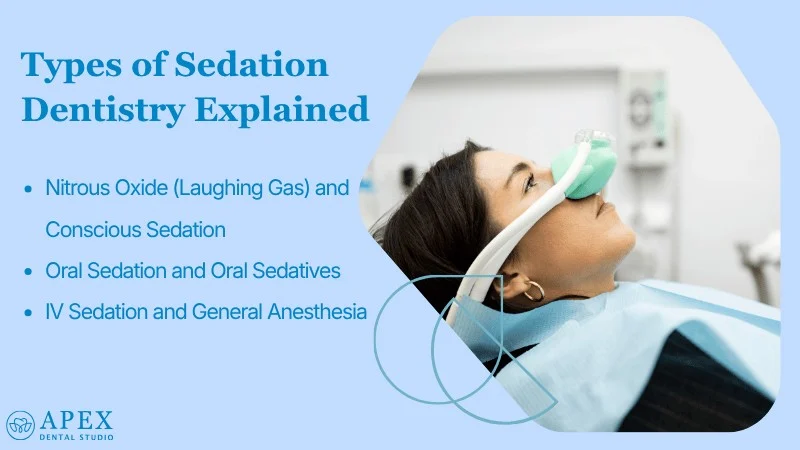
Nitrous Oxide (Laughing Gas) and Conscious Sedation
Nitrous oxide offers the mildest form of sedation dentistry available at most dental offices. You breathe the gas through a small mask placed over your nose, and it takes effect within minutes.
Laughing gas keeps you awake and responsive throughout your appointment. You’ll feel relaxed and less anxious, but you can still communicate with your dentist and follow instructions. The effects wear off quickly once the mask is removed.
This option works well if you have mild to moderate anxiety or need shorter procedures. You can drive yourself home after your appointment since the gas leaves your system completely within minutes.
Benefits of nitrous oxide:
- No needles required
- Quick onset and recovery
- Adjustable dosage during treatment
- Minimal side effects
Conscious sedation with laughing gas helps reduce anxiety while keeping you awake and responsive throughout the procedure.
Oral Sedation and Oral Sedatives
Oral sedation involves taking a prescribed pill before your dental appointment. Your dentist typically gives you medication from the benzodiazepine family to take about an hour before your procedure.
The sedative makes you drowsy and deeply relaxed, though you remain conscious. You might feel so calm that you don’t remember much about the procedure afterward. Some patients even fall asleep but can be easily awakened.
Different sedation methods offer varying benefits depending on your needs and procedure complexity. Oral sedatives work well for moderate to severe dental anxiety and longer appointments.
You’ll need someone to drive you to and from your appointment. The effects can last several hours after your procedure ends.
IV Sedation and General Anesthesia
IV sedation delivers medication directly into your bloodstream through a small needle in your arm or hand. This method provides deeper sedation than oral medications and works faster.
Your dentist can adjust the sedation level throughout your procedure. You’ll likely have little to no memory of the treatment, though you remain in a state of conscious sedation rather than completely unconscious.
General anesthesia represents the deepest level of sedation, where you’re completely unconscious. Hospitals or specialized surgical centers typically provide this option for extensive dental procedures or patients with severe dental phobias.
IV sedation might be your best option for extensive surgical procedures or severe dental phobias. An anesthesiologist monitors your vital signs throughout the procedure to ensure your safety.
Recovery takes longer with both IV sedation and general anesthesia. You’ll need someone to drive you home and stay with you for several hours afterward.
Comparing Natural Methods and Sedation Dentistry
Natural approaches and sedation options each offer distinct benefits for managing dental fear, with effectiveness varying based on anxiety severity and individual needs. Understanding how these methods compare helps you choose the right approach for your situation.
Effectiveness for Different Levels of Dental Anxiety
Natural methods work best when you have mild to moderate dental anxiety. Relaxation techniques like deep breathing and muscle relaxation can significantly reduce your stress during routine cleanings and simple procedures.
Hypnotherapy has shown promising results for people with moderate fears who are willing to practice these skills regularly.
Sedation dentistry becomes more appropriate when you experience severe dental phobia. If you avoid the dentist for years or have panic attacks at the thought of treatment, natural methods alone may not be enough.
Nitrous oxide provides light sedation that keeps you calm while still awake and responsive. For deeper anxiety, oral sedation uses medication taken before your appointment to induce a relaxed, drowsy state.
IV sedation offers the strongest option for extreme dental phobia. This method allows your dentist to adjust sedation levels throughout the procedure while you remain in a state of deep relaxation with little to no memory of the treatment.
Advantages and Limitations of Each Approach
Natural methods give you complete control without side effects or medication risks. You stay fully alert and can drive yourself home after appointments. These techniques cost nothing extra and improve with practice over time.
However, they require commitment and multiple sessions to master, and they may not provide enough relief for severe phobia.
Sedation dentistry delivers immediate anxiety relief without requiring practice or preparation. It enables dentists to complete multiple procedures in one visit, which saves you time and reduces repeat appointments.
The main limitations include higher costs, the need for someone to drive you home, and potential side effects like drowsiness or nausea. Some sedation methods also require fasting before treatment.
Safety, Risks, and Suitability Considerations
Natural approaches carry virtually no safety risks. Anyone can use relaxation techniques regardless of age, health conditions, or medications. These methods actually support your overall well-being beyond dental visits.
Sedation options require careful evaluation of your medical history. Nitrous oxide is generally safe but may cause dizziness or headaches in some people.
Oral sedation and IV sedation carry more risks, especially if you have respiratory problems, heart conditions, or take certain medications. Pregnant women and people with specific allergies may not be suitable candidates for sedation.
Your dentist must monitor your vital signs throughout sedated procedures. While complications are rare with proper screening, sedation does require trained staff and specialized equipment.
Children, elderly patients, and those with complex medical conditions need extra precautions when considering sedation options.
Creating a Personalized Plan for Coping with Dental Phobia
Developing a customized approach to managing dental anxiety starts with honest communication with your dentist and identifying specific relaxation techniques that work for your unique triggers.
Building long-term habits around oral health and anxiety management helps you maintain regular dental care without overwhelming fear.
Working with Your Dental Team

Sharing your specific fears openly with your dentist allows them to adjust their approach to your needs. Tell them exactly what triggers your anxiety, whether it’s needles, drilling sounds, or feeling trapped in the dental chair.
Your dentist can offer personalized care options:
- Hand signals to pause treatment when you feel overwhelmed
- Detailed explanations before each step of a procedure
- Scheduled breaks during longer appointments
- Adjustments to room lighting or temperature for comfort
Ask about visiting the office before your actual appointment to familiarize yourself with the environment. Meeting staff members and sitting in the dental chair without treatment reduces anxiety through gradual exposure.
Request that your dentist avoid certain words that trigger fear and use neutral language instead. Many dental professionals now understand how specific terminology increases patient stress and will adapt their communication style.
Long-Term Strategies for Anxiety Relief
Practice relaxation techniques daily, not just before dental appointments, to build skills that become automatic responses to stress. Spend 10-15 minutes each day on deep breathing exercises or progressive muscle relaxation.
Schedule regular checkups every six months to prevent small problems from becoming major procedures. Routine visits become less intimidating over time as you build positive experiences with your dental team.
Maintain these habits between appointments:
- Keep a journal tracking anxiety levels and what helps reduce them
- Join support groups where others share their experiences with the fear of the dentist
- Continue therapy sessions if you’re working with a mental health professional
- Practice visualization of successful dental visits
Set small, achievable goals for each appointment rather than focusing on the complete elimination of all anxiety. Celebrating progress builds confidence for future visits and reinforces positive patterns around oral health maintenance.
Frequently Asked Questions
Many people have questions about managing their fear of the dentist and want to know which approach fits their needs best. Understanding your options can help you make informed decisions about your dental care.
What are some simple ways to stay calm before and during a dental appointment?
Deep breathing exercises can help you relax by slowing your heart rate and reducing tension. Try breathing in slowly through your nose for four counts, holding for four counts, and exhaling through your mouth for four counts.
Listening to music or a podcast during your appointment can distract your mind from dental sounds. Many dentists allow patients to wear headphones during procedures.
You can also try progressive muscle relaxation, where you tense and then release different muscle groups in your body. Start with your toes and work your way up to your head, focusing on the feeling of tension leaving each area.
Arriving early gives you time to settle in and get comfortable with the environment. Rushing can increase your anxiety levels before you even sit in the dental chair.
How can I handle extreme dental anxiety when I know I need treatment?
Talk to your dentist about your fears before scheduling any procedures. They can explain each step of the treatment and work with you to create a plan that feels manageable.
Consider starting with a simple dental exam and cleaning to build trust with your dental team. This allows you to get comfortable with the office and staff without undergoing extensive treatment.
Modern dentistry offers various approaches to help anxious patients feel more at ease during treatment. Your dentist might suggest taking breaks during procedures or using hand signals to communicate when you need a pause.
Some people find it helpful to bring a friend or family member to their appointment for support. Having someone you trust nearby can make the experience less intimidating.
What types of sedation are available at the dentist, and how do they differ?
Nitrous oxide, also called laughing gas, is the mildest form of sedation and wears off quickly after your appointment. You breathe it through a mask during your procedure and remain awake and aware.
Oral sedation involves taking a pill before your appointment to help you feel relaxed and drowsy. You will still be conscious but may not remember much about the procedure.
IV sedation delivers medication directly into your bloodstream for a deeper level of relaxation. You might fall asleep or feel very drowsy, though you can still respond to the dentist.
General anesthesia puts you completely asleep and is typically reserved for complex procedures or severe anxiety cases. This option requires special equipment and monitoring.
Is sedation dentistry safe, and what side effects should I expect?
Sedation dentistry is generally safe when administered by trained professionals who monitor your vital signs throughout the procedure. Your dentist will review your medical history to ensure you are a good candidate.
Nitrous oxide typically causes no side effects, though some people feel slightly dizzy or nauseous afterward. These feelings usually pass within minutes of removing the mask.
Oral and IV sedation can cause drowsiness that lasts several hours after your appointment. You will need someone to drive you home, and you should plan to rest for the remainder of the day.
Some people experience headaches, nausea, or grogginess after sedation. These side effects are usually mild and temporary.
How do I know whether natural relaxation methods are enough or if I should consider sedation?
Think about how your anxiety affects your ability to get dental care. If you can attend appointments but feel nervous, natural relaxation techniques might work well for you.
Consider sedation if your fear prevents you from scheduling appointments or causes you to cancel repeatedly. Avoiding necessary dental work can lead to more serious oral health problems.
The length and complexity of your procedure also matter. Simple cleanings might be manageable with breathing exercises, while longer treatments could benefit from sedation.
Your dentist can help you assess your anxiety level and recommend the most appropriate approach. They have experience working with anxious patients and can suggest what tends to work best.
What should I tell my dentist about my fear so they can help me feel more comfortable?
Be specific about what triggers your anxiety, whether it’s the sound of the drill, fear of pain, or feeling out of control. Your dentist can address these specific concerns with targeted solutions.
Share any past negative experiences that contribute to your current fear. Understanding your history helps your dental team avoid situations that might upset you.
Let them know if you have physical reactions to anxiety, like a rapid heartbeat, sweating, or feeling faint. They can monitor you more closely and adjust their approach accordingly.
Ask questions about anything you don’t understand. Knowing what to expect during procedures often reduces anxiety because it eliminates the fear of the unknown.