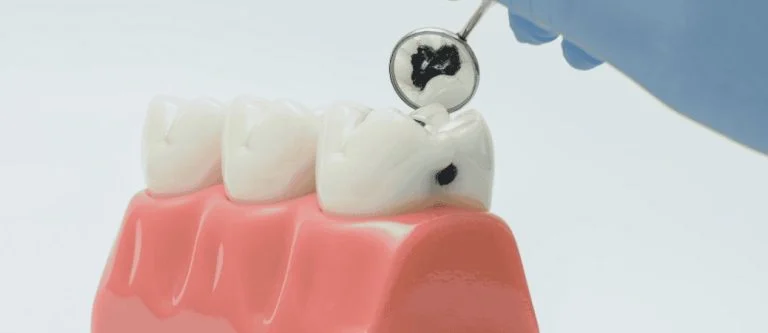
You might have noticed a concerning pattern with your dental work. Your old fillings keep cracking or falling out, leaving you frustrated.
So, if you are wondering why do dental fillings keep falling out, you need to understand that different factors lead to this situation.
Dental fillings are not permanent and typically last between 5 to 15 years, depending on the material used, and they can fail due to normal wear, new decay around the filling, or damage from grinding and chewing hard foods.
This problem is more common than you think. Nearly half of dental restorations fail within 10-15 years due to various factors.
Understanding why your fillings keep failing can help you protect your teeth and avoid the cycle of repeated dental visits.
The good news is that you can take steps to make your fillings last longer and know what to do when one falls out.
Learning the warning signs of a failing filling and how to care for your dental work properly can save you time, money, and discomfort down the road.
Key Takeaways
- Dental fillings naturally wear out over time and can crack or fall out due to decay, grinding, or biting hard foods
- Warning signs include tooth pain, sensitivity to hot or cold, and visible gaps where the filling used to be
- Regular dental checkups and proper oral care help prevent filling failure and maintain a pain-free smile
How Dental Fillings Age and Deteriorate
Dental fillings don’t last forever, and understanding how different materials break down helps explain why your old fillings might be failing.
The type of filling you have, daily wear from chewing, and temperature swings in your mouth all play a role in how quickly fillings deteriorate.
Common Filling Materials and Their Lifespan
Different filling materials have different lifespans based on their composition and durability. Here’s what you can expect from the most common types:
Amalgam fillings (silver-colored) typically last 10-15 years or longer. They’re made from a mixture of metals including silver, mercury, tin, and copper. These are extremely durable but can corrode over time.
Composite fillings (tooth-colored) usually last 5-7 years, though some can last up to 10 years with proper care.
They’re made from plastic resin and glass particles that bond directly to your tooth. They can stain and wear down faster than metal fillings.
Glass ionomer fillings are the least durable option, lasting about 5 years. They’re made from acrylic and a specific type of glass material.
Dentists often use them for fillings below the gum line or in baby teeth.
Research shows that nearly half of restorations fail within 10-15 years due to various factors affecting their integrity.
Natural Wear and Tear Over Time
Your fillings face constant stress every single day from normal activities. Chewing puts repeated pressure on your fillings, which gradually damages even extremely durable materials.
Each time you bite down, you create forces that can reach up to 200 pounds per square inch on your back teeth. This constant pressure causes tiny cracks to form in the filling material.
Over months and years, these small cracks grow larger.
Grinding your teeth at night accelerates this wear significantly. The sideways motion creates even more stress on fillings than regular chewing does.
The edges of fillings also wear down over time, creating gaps between the filling and your tooth. Bacteria can get into these gaps and cause new decay around the filling.
Impact of Temperature Changes on Fillings
Your fillings expand and contract every time you eat or drink something hot or cold. This constant expansion and contraction weakens the bond between the filling and your tooth.
Metal fillings expand and contract at different rates than your natural tooth enamel. When you drink hot coffee, the filling expands more than the tooth around it.
When you eat ice cream, it contracts more quickly than the tooth.
This mismatch creates stress at the edges of the filling. Over time, these stress points develop into cracks.
Composite fillings experience less of this problem because they expand at rates closer to natural teeth.
The temperature changes can also cause old dental fillings to deteriorate more quickly, especially if the filling is already weakened from years of use.
Main Causes of Fillings Cracking or Coming Loose
Fillings can crack or come loose for several reasons, ranging from new decay forming around the edges to problems with how the filling was placed or stress from your bite.
Understanding what causes these issues can help you protect your dental work and know when to see your dentist.
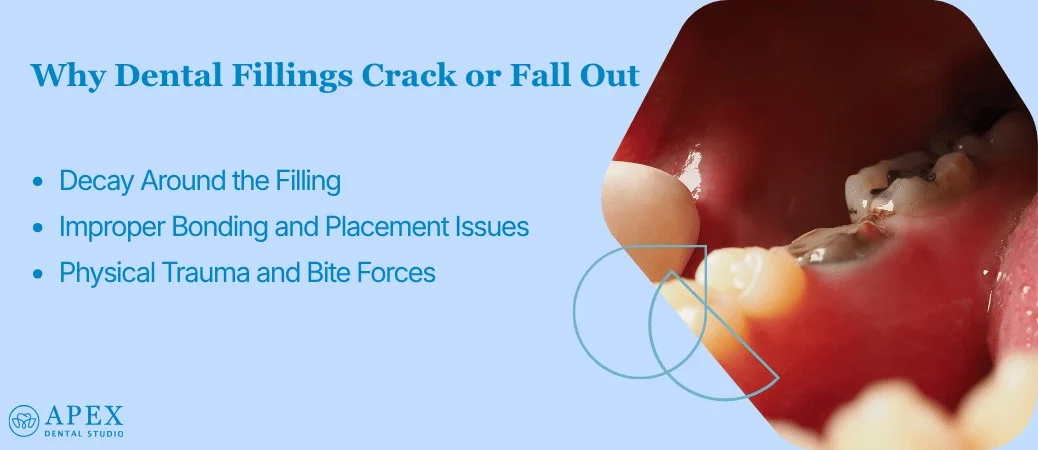
Decay Around the Filling
New cavities can form around the edges of your existing fillings over time. When decay develops around the filling, it weakens the bond between the filling material and your tooth structure.
This creates gaps where bacteria can enter and cause more damage.
The decay slowly releases the filling from your tooth until it becomes loose or falls out completely. You might not notice this happening at first because the decay often starts in hard-to-see areas between your tooth and the filling.
Poor oral hygiene makes this problem worse. When you don’t brush and floss regularly, plaque builds up around your fillings and creates the perfect environment for decay.
Improper Bonding and Placement Issues
Sometimes fillings fail because they weren’t placed correctly in the first place. The bonding process requires your tooth to be completely dry and clean before the filling material is applied.
Any moisture or contamination during placement can prevent the filling from sticking properly.
The size and shape of the filling also matter. If a filling is too large for the remaining tooth structure, it won’t have enough support to stay in place.
Your dentist needs to prepare the tooth cavity correctly and use the right amount of filling material.
Old fillings made from certain materials like amalgam can also develop cracks as they age and expand or contract with temperature changes.
Physical Trauma and Bite Forces
Your teeth experience significant pressure every time you chew, and this constant stress can damage fillings over time.
Teeth grinding or clenching your jaw puts even more force on your dental work, especially at night when you’re not aware you’re doing it.
This condition, called bruxism, can crack fillings or gradually loosen them from your teeth. The repeated pressure eventually causes the filling material to break down or separate from the tooth.
Biting down on hard foods like ice, nuts, or hard candy can also crack or dislodge fillings instantly. Even everyday chewing can wear down fillings if your bite isn’t aligned properly, creating uneven pressure on certain teeth.
Warning Signs of a Failing Dental Filling
Catching a problem early means you can avoid more painful and expensive dental work later.
Your body gives you clear signals when something’s wrong with a filling, from sensitivity when you eat to visible damage you can see in the mirror.
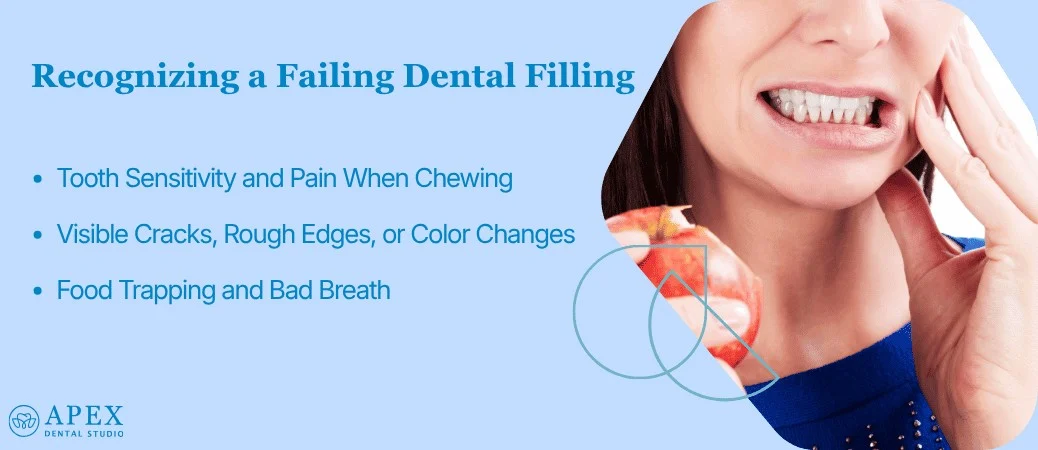
Tooth Sensitivity and Pain When Chewing
Tooth sensitivity is often the first clue that your filling might be failing. You might notice a sharp pain when you drink something cold or hot.
This happens because the seal between your filling and tooth has weakened, letting temperature reach the sensitive inner parts of your tooth.
Pain when chewing tells you something specific is wrong. If you feel discomfort when you bite down on that tooth, the filling may have cracked or loosened.
The pain might happen only when you eat on that side of your mouth or when you bite certain foods.
Some people describe feeling like their bite is “off” or uneven. This can mean the filling has worn down or shifted slightly. Poor sealing can leave the tooth vulnerable and cause ongoing discomfort that gets worse over time.
Visible Cracks, Rough Edges, or Color Changes
You might spot problems with your filling just by looking in the mirror. Cracks or chips in the filling material are clear signs something’s wrong.
Even tiny cracks can let bacteria sneak in and cause decay underneath.
Run your tongue over your teeth between meals. Does one feel rough or sharp? A rough or sharp edge you can feel with your tongue means the filling has worn down or broken.
Look for dark spots or discoloration around the edges of your filling. This color change often means decay has started forming where the filling meets your tooth.
The area might look darker or even black compared to the rest of your tooth.
Food Trapping and Bad Breath
Getting food stuck in the same spot repeatedly is a red flag. When a filling starts to fail, gaps form between the filling and your tooth. These gaps trap food particles every time you eat.
You might notice you always need to floss around one particular tooth. Pain when flossing around a filled tooth can indicate the filling has shifted or gaps have formed.
Bad breath that won’t go away even after brushing might point to a failing filling. Bacteria feed on trapped food and create an odor
If you notice persistent bad breath coming from one area of your mouth, schedule a dental checkup to have it examined.
What To Do After a Filling Falls Out or Cracks
Acting quickly when a filling falls out or cracks helps protect your tooth from further damage and reduces discomfort.
You need to take immediate protective steps, schedule dental care promptly, and understand both temporary fixes and permanent solutions.
Immediate Steps to Protect Your Tooth
Rinse your mouth gently with warm water to clean the area where your filling fell out. This removes any loose debris and helps you see the affected tooth more clearly.
Protect the exposed tooth by:
- Avoiding chewing on that side of your mouth
- Staying away from very hot, cold, or sweet foods that can cause pain
- Using dental wax to cover exposed areas temporarily
- Taking over-the-counter pain medication if needed
Keep the area clean by brushing gently around the tooth. Be careful not to brush directly inside the cavity opening, as this might cause more damage or pain.
If you still have the lost filling, save it in a small container. While your dentist probably won’t reuse it, seeing the old filling can help them understand why it fell out.
When to Contact Your Dentist
Call your dentist as soon as you notice a cracked or missing filling. Most dental offices reserve time slots for emergencies like yours.
You should seek same-day or next-day care if you experience severe pain, swelling, or signs of infection. These symptoms might mean the decay has reached deeper into your tooth, possibly requiring a root canal.
Schedule your dental appointment within a few days even if you don’t feel pain. Teeth without fillings can decay quickly, and waiting too long makes the damage worse.
The longer you wait, the more likely you’ll need more extensive treatment instead of a simple filling replacement.
Tell the office staff that your filling fell out when you call. This helps them understand the urgency and find you an appropriate appointment time.
Temporary and Long-Term Solutions
Temporary dental cement from your pharmacy can protect your tooth until you see your dentist. Apply it according to package directions to seal the opening.
Sugar-free gum can work as a very short-term fix if you can’t get dental cement right away. Press it gently into the cavity to keep food out, but replace it with proper dental cement quickly.
Your dentist will examine the tooth to determine the best permanent solution:
| Solution | When It’s Used |
| New filling | Minor decay or damage around the old filling |
| Larger filling or inlay | Significant tooth structure lost |
| Crown | Tooth weakened and needs full coverage |
| Root canal with crown | Decay reached the tooth’s nerve |
The filling replacement process usually takes one visit. Your dentist removes any new decay, prepares the tooth, and places a new filling that should last many years with proper care.
Prevention and Care for Long-Lasting Fillings
Taking care of your fillings starts with daily habits and smart choices at the dentist’s office.
Simple steps like brushing properly and getting regular checkups can help your fillings last for many years.

Good Oral Hygiene Habits
Keeping your teeth clean is the best way to protect your fillings from decay and damage. You should brush twice a day with fluoride toothpaste to strengthen your tooth enamel and prevent cavities from forming around your fillings.
Make sure to brush gently around filled teeth to remove food particles and plaque.
Flossing daily is just as important as brushing. Food can get trapped between your teeth and around fillings, which can lead to new decay.
When bacteria sneak under your filling, it weakens the bond and can cause the filling to fall out.
Good oral hygiene also means limiting sugary foods and drinks. Sugar feeds the bacteria in your mouth that cause decay.
Rinsing with water after meals helps wash away food particles when you can’t brush right away.
Addressing Bruxism and Using a Night Guard
Grinding or clenching your teeth puts extra pressure on your fillings. This habit, called bruxism, can crack or loosen fillings over time. Many people grind their teeth at night without even knowing it.
A night guard protects your fillings by creating a cushion between your upper and lower teeth. Your dentist can make a custom night guard that fits comfortably in your mouth. This simple device can add years to the life of your fillings.
If you notice jaw pain, headaches, or worn teeth, these are signs you might be grinding. Talk to your dentist about getting fitted for a night guard.
The investment is worth it to avoid fillings falling out from the constant pressure.
Importance of Regular Dental Checkups
Regular dental checkups catch problems before they get worse. Your dentist can spot early signs that a filling is starting to fail during routine exams. Small cracks or gaps around fillings are easier to fix when caught early.
You should visit your dentist every six months for cleanings and checkups. During these visits, your dentist checks for decay around existing fillings and makes sure they’re still sealed properly.
Professional cleanings remove plaque and tartar that regular brushing can’t reach.
Don’t wait until you feel pain to see your dentist. By the time a filling hurts, the problem may be more serious and costly to fix.
Choosing the Right Filling Material
Different filling materials work better for different teeth and situations. Composite resin fillings match your tooth color and work well for front teeth and small cavities.
Amalgam fillings are very strong and last longer in back teeth that do heavy chewing.
Talk to your dentist about which material is best for your specific tooth. Some materials bond better to teeth than others.
Your dentist will consider factors like the size of the cavity, where it’s located, and your bite pattern.
The right material choice from the start can mean fewer problems later. Some fillings last 10-15 years or longer when placed correctly and cared for properly.
Financing Options and Maintenance Planning
Replacing old fillings can add up quickly, especially if you need multiple repairs. Many dental offices offer dental financing options that let you spread the cost over several months instead of paying everything at once.
Common financing options include:
- Monthly payment plans through your dentist’s office
- Third-party healthcare credit cards like CareCredit
- Dental savings plans that offer discounts on procedures
- Health savings accounts (HSA) or flexible spending accounts (FSA)
You should ask your dentist about available financing before your appointment. Some offices offer interest-free plans if you pay within a certain timeframe.
Others work with lending companies that approve applications quickly.
Planning for future maintenance helps you avoid unexpected costs. Regular checkups let your dentist spot wear and damage to fillings before they fall out completely. This can save you money in the long run.
Budget for these ongoing costs:
| Expense | Frequency |
| Regular cleanings | Every 6 months |
| Filling replacements | Every 5-15 years |
| Emergency repairs | As needed |
Setting aside a small amount each month creates a dental fund for when you need it. Even $20 to $30 per month gives you a cushion for unexpected filling repairs.
Your dental insurance may cover part of your filling costs. Check your plan to see what percentage they pay for restorative work.
Some plans have waiting periods or annual maximums that affect how much help you get with financing.
Frequently Asked Questions
Old fillings can crack or fall out for several reasons, from normal wear over many years to new decay forming underneath.
Recognizing warning signs early and knowing what to do when problems occur can help you protect your teeth.
What are the most common reasons dental fillings break or fall out over time?
Fillings don’t last forever. Nearly half of restorations fail within 10-15 years due to normal wear and tear.
The most common reasons include decay forming around or under the filling, problems with how the filling bonded to your tooth, and daily pressure from chewing.
Biting down on hard foods can crack a filling or make it come loose. Old filling material also weakens over time, making it more likely to break.
Wear, cracks, and decay are the main culprits behind filling failure. If your filling is 10 years or older, it may start to weaken naturally.
How can I tell if a filling is failing before it comes loose?
Your mouth usually gives you warning signs before a filling falls out completely. You might notice a sharp edge when you run your tongue over the tooth.
Sensitivity to hot, cold, or sweet foods often means something is wrong. You may feel roughness on the tooth surface where the filling used to be smooth.
Pain when you bite down or chew can signal that the filling has cracked or loosened.
Some people notice a different feeling when flossing around the tooth. If the floss catches or shreds, decay may have formed around the filling.
Does teeth grinding or jaw clenching make fillings more likely to crack?
Yes, grinding your teeth puts extra pressure on your fillings. This habit, called bruxism, happens when you clench or grind your teeth, often during sleep.
The constant force can crack fillings or make them come loose over time. Teeth grinding increases the risk of fillings falling out.
If you wake up with jaw pain or headaches, you might be grinding your teeth at night. Your dentist can make you a night guard to protect your fillings and teeth.
Can tooth decay return under an old filling and cause it to break down?
Decay can definitely form under an old filling. When this happens, it weakens the bond between the filling and your tooth.
Small gaps can form between the filling and tooth over time, letting bacteria and food particles get underneath. This creates new cavities that you can’t see from the outside.
The decay eats away at the healthy tooth structure that holds the filling in place.
Poor oral hygiene increases the risk of decay forming around fillings. Regular brushing and flossing help prevent this problem.
What should I do if a filling falls out and I can’t see a dentist right away?
Call your dentist as soon as possible to schedule an appointment. Even if the tooth doesn’t hurt, it needs attention.
Rinse your mouth with warm salt water to keep the area clean. Avoid chewing on that side of your mouth to prevent further damage.
You can buy temporary dental cement at most drugmarts to cover the hole until you see your dentist.
Stick to soft foods and avoid anything too hot, cold, or sweet. These can irritate the exposed tooth. Don’t try to put the old filling back in yourself.
What are my options for replacing a damaged filling, and how long do they usually last?
Your dentist will examine the tooth to determine the best replacement option. If the tooth is still strong, a new filling usually works well.
Composite resin fillings typically last 5 to 10 years, while amalgam fillings can last 10 to 15 years. If too much tooth structure is damaged, you might need a crown instead of a simple filling.
Crowns can last 15 years or longer with good care.
Sometimes a tooth needs a larger restoration called an inlay or onlay. These fit between a filling and a crown in terms of coverage and durability.
Your dentist will recommend the option that gives your tooth the best long-term protection.