If you live with sleep apnea, you know how draining poor sleep can feel. You wake up tired, struggle to focus, and push through the day without real energy. It may seem like a night problem, but sleep apnea can affect much more than your rest.
Yes, treating sleep apnea can improve your overall health by helping you sleep better, lowering health risks, and boosting your daily energy and focus.
When you manage your breathing at night, you support your heart, brain, and metabolism. You also improve your mood and daytime alertness.
Treating sleep apnea often includes options like CPAP therapy, oral devices, weight loss, or other medical care.
As your sleep health improves, you may notice clearer thinking, steadier energy, and better quality of life. Keep going to learn how sleep improvement can change more than just your nights.
Key Takeaways
- Treating sleep apnea supports better sleep health and daily energy.
- Proper treatment can lower health risks linked to poor breathing at night.
- Medical care and lifestyle changes both play a role in sleep improvement.
Table of Content
- How Sleep Apnea Affects Health
- Health Benefits of Treating Sleep Apnea
- Main Therapies and Treatment Options
- Lifestyle Changes and Alternative Treatments
- Working With Healthcare Providers and Long-Term Outlook
- Frequently Asked Questions
How Sleep Apnea Affects Health
Sleep apnea changes how you breathe at night and how you feel during the day. It can affect your oxygen levels, mood, heart health, and ability to think clearly.
Understanding Obstructive and Central Sleep Apnea
Sleep apnea comes in two main forms: obstructive sleep apnea (OSA) and central sleep apnea (CSA).
With obstructive sleep apnea, your throat muscles relax too much during sleep. This causes an airway obstruction, which blocks airflow even though your body tries to breathe. OSA is the most common type in adults.
With central sleep apnea, your brain does not send steady signals to control breathing. Your airway stays open, but your breathing stops and starts because of a signal problem.
In both types, your breathing can pause for at least 10 seconds at a time. These repeated pauses lower your oxygen levels and disrupt your sleep cycle.
A doctor usually confirms sleep apnea through a sleep study, which tracks breathing, oxygen, heart rate, and brain activity overnight.
Common Symptoms and Warning Signs
The symptoms of sleep apnea often show up at night, but they affect you all day.
You may have loud snoring, gasping, or choking during sleep. A partner often notices these signs first. Not everyone who snores has sleep apnea, but heavy snoring with breathing pauses is a red flag.
During the day, you may feel daytime sleepiness or constant daytime fatigue. You might struggle with attention, memory, or clear thinking.
Some people develop morning headaches because their oxygen drops during the night.
Mood changes are also common. You may feel more irritable, anxious, or depressed. Some adults also report insomnia, waking up often or feeling restless even after hours in bed.
If these sleep apnea symptoms continue, they can interfere with work, driving, and daily life.
Consequences of Untreated Sleep Apnea
Untreated sleep apnea does more than make you tired. It puts stress on your heart and blood vessels.
Repeated drops in oxygen can raise your blood pressure and lead to hypertension. Over time, this strain increases your risk of heart disease, including atrial fibrillation, heart failure, and stroke.
Sleep apnea also links to type 2 diabetes and poor blood sugar control. Interrupted sleep affects how your body uses insulin.
Your brain can suffer as well. Ongoing sleep loss and low oxygen may weaken cognitive function, including memory and decision-making.
When you leave sleep apnea untreated, these risks grow quietly in the background.
Health Benefits of Treating Sleep Apnea
When you treat sleep apnea, you improve how you sleep, how your heart and metabolism work, and how clearly you think during the day. Effective care also supports your mood, focus, and daily energy.

Improvement in Sleep Quality and Daytime Alertness
Sleep apnea treatment keeps your airway open so you can sleep without repeated breathing pauses. CPAP therapy, a form of positive airway pressure, delivers steady air through a mask to prevent airway collapse.
Many people notice better rest within days of starting CPAP therapy.
You may wake up less often and spend more time in slow-wave sleep, which helps your body recover. With fewer drops in oxygen, you feel less groggy in the morning.
Better sleep at night leads to stronger daytime alertness. Research shows most people using CPAP have less daytime sleepiness, and many see major improvement in a few weeks.
If you cannot tolerate CPAP, your sleep specialist may suggest:
- Oral appliance therapy, such as a mandibular advancement device (MAD)
- BiPAP, APAP (auto-CPAP), or ASV for more complex breathing issues
- EPAP valves for mild cases
- Surgery like UPPP, hypoglossal nerve stimulation, or rapid maxillary expansion
Each option aims to reduce breathing events so you can sleep longer and more deeply.
Cardiovascular and Metabolic Risk Reduction
Untreated sleep apnea strains your heart. Repeated oxygen drops raise blood pressure and increase stress hormones.
When you use CPAP or another effective treatment, your blood pressure may drop within weeks. Lower pressure reduces strain on your arteries and heart.
Studies show treatment can also reduce irregular heartbeats at night and may lower stroke risk.
Sleep apnea also affects your metabolism. It links to obesity, insulin resistance, and type 2 diabetes. Consistent treatment may improve blood sugar control, especially if you use your device every night.
You support these gains with:
- Weight management or weight loss
- Regular exercise
- Healthy sleep habits
- Avoiding alcohol before bed
Some people use medications like tirzepatide (Zepbound) for obesity under medical care. If you also have COPD, your sleep doctor may adjust PAP therapy settings to protect both lung and heart function.
Cognitive, Mood, and Quality-of-Life Changes
Poor sleep affects your brain. You may struggle with memory, focus, and decision-making.
When you treat sleep apnea, your brain receives steady oxygen during the night. Many people report clearer thinking and better concentration within months. You may feel less irritable and more patient at work and home.
Sleep medicine research links untreated sleep apnea with depression and anxiety. Regular CPAP use can reduce depressive symptoms in some people.
Improved sleep also helps couples who share a bed, since treatment often reduces loud snoring and nighttime gasping, which supports closer relationships.
Quality of life often improves in simple ways. You wake up with fewer headaches, drive with better focus, and feel more stable during the day.
With guidance from a sleep specialist, you can choose the treatment that fits your needs and stay consistent for lasting results.
Main Therapies and Treatment Options
Doctors treat sleep apnea with devices that keep your airway open, mouthpieces that move your jaw forward, or surgery that changes airway structure. Each option works in a different way and fits different needs.
Continuous and Bilevel Positive Airway Pressure Devices
A CPAP machine pushes steady air through a hose and a CPAP mask to keep your airway open while you sleep.
This method, called continuous positive airway pressure, is often the first treatment for moderate to severe sleep apnea.
You can choose from nasal masks, full face masks, or nasal pillows. A good fit matters. A mask leak can reduce air pressure and cause noise.
You may also notice dry mouth or nasal congestion. Heated humidifiers and better mask fitting often help.
If you struggle to breathe out against steady pressure, your doctor may suggest bilevel positive airway pressure.
This device lowers pressure when you exhale. It can feel more natural and may help if you also have lung disease or need higher pressure settings.
Simple steps like treating nasal congestion and focusing on nasal breathing can also improve comfort and results.
Oral Appliance Therapies and Custom Mouthpieces
If you cannot tolerate CPAP, you may try an oral appliance. These custom mouthpieces fit over your teeth and move your lower jaw forward. The most common type is a mandibular advancement device.
This approach, often called oral appliance therapy (OAT), works best for mild to moderate sleep apnea. It can also help if you have severe sleep apnea but cannot use CPAP.
A trained dentist must fit the device. You will need follow-up visits to adjust the jaw position. Side effects can include jaw soreness, tooth movement, or bite changes.
You may combine OAT with positional therapy, such as using a wedge pillow or devices that keep you off your back.
Some people also try myofunctional therapy to strengthen tongue and throat muscles, though evidence remains limited.
Surgical Procedures and Implantable Devices
When devices do not work, you may consider sleep apnea surgery. Surgeons aim to remove or reposition tissue that blocks your airway.
Common procedures include uvulopalatopharyngoplasty (UPPP), which removes excess tissue from the throat. A more extensive option is maxillomandibular advancement (MMA).
In MMA, surgeons move your upper and lower jaws forward to enlarge the airway. This surgery can reduce apnea severity but requires a long recovery.
Newer options include upper airway stimulation, an implantable device that sends mild signals to the tongue nerve during sleep. This keeps your airway open without a mask.
In certain cases, doctors may use phrenic nerve stimulation for central sleep apnea. Each surgical or implant choice requires careful testing and follow-up to ensure it fits your specific condition.
Lifestyle Changes and Alternative Treatments
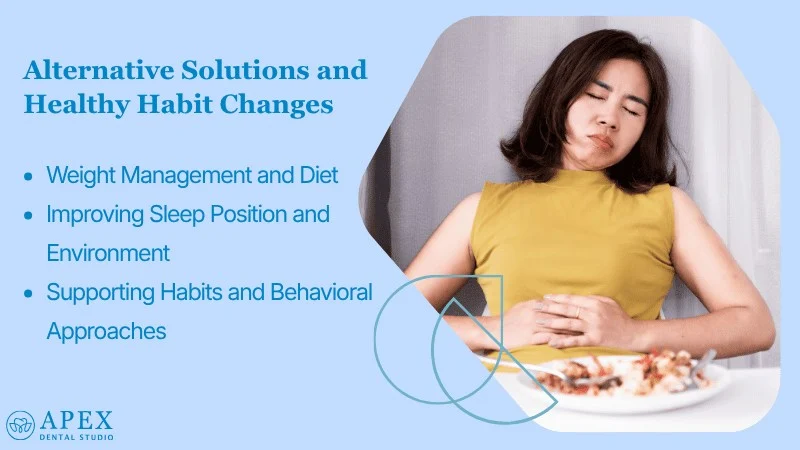
Treating sleep apnea often starts with daily habits you can control. Changes in weight, sleep position, and routine can reduce symptoms and support medical care such as CPAP or an oral device.
Weight Management and Diet
If you carry extra weight, especially around your neck and upper body, it can narrow your airway. This makes breathing harder during sleep. Weight loss can lower the number of breathing pauses and improve oxygen flow.
Many doctors recommend weight management as a first step for obstructive sleep apnea.
Focus on steady, realistic changes:
- Eat balanced meals with vegetables, lean protein, and whole grains
- Limit alcohol, especially in the evening
- Avoid heavy meals close to bedtime
Even a modest weight loss can improve sleep quality and reduce daytime sleepiness.
If you struggle with obesity, ask your doctor about a structured program. In some cases, a sleep study may show clear improvement after weight changes.
Improving Sleep Position and Environment
Your sleep position can affect how often your airway collapses. Sleeping on your back can make symptoms worse because gravity pulls the tongue and soft tissue backward.
Positional therapy trains you to sleep on your side. Simple tools include body pillows or wearable devices that gently prompt you to roll over.
Your bedroom setup also matters. Keep the room dark, cool, and quiet. Use a supportive pillow that keeps your neck aligned.
If nasal congestion blocks nasal breathing, treat allergies or use saline rinses. Clear nasal passages can improve airflow and support other treatments.
Supporting Habits and Behavioral Approaches
Healthy sleep habits help you manage symptoms and reduce daytime sleepiness. Go to bed and wake up at the same time each day, even on weekends.
Limit screen time before bed. Blue light can delay sleep and reduce sleep quality. Avoid alcohol and sedatives at night because they relax throat muscles and worsen breathing pauses.
Some people benefit from structured lifestyle plans that combine diet, exercise, and behavior changes.
Living with sleep apnea requires ongoing attention. Track your symptoms, note changes in energy levels, and share updates with your provider.
Small daily actions can support long-term sleep improvement and better overall health.
Working With Healthcare Providers and Long-Term Outlook
You improve your results when you work closely with trained providers and stick with follow-up care. The right team helps you adjust treatment, manage side effects, and track changes in your heart, brain, and mood over time.
Role of Sleep Specialists and Dentists

You usually start with a sleep doctor or sleep specialist trained in sleep medicine. Many follow standards from the American Academy of Sleep Medicine.
They review your symptoms, medical history, and may order a sleep study to diagnose sleep apnea.
A sleep study measures breathing pauses, oxygen levels, and sleep stages. It also defines your sleep apnea severity, which guides treatment choices.
If you cannot tolerate CPAP, a dentist trained in dental sleep medicine may fit you with an oral appliance. This device moves your lower jaw forward to keep your airway open.
You may also hear about muscle exercises for the mouth and tongue. These exercises may help in mild cases or along with other therapies.
Managing Side Effects and Adherence to Therapy
You get the best results when you use your therapy every night. Studies show that CPAP therapy improves long-term health and lowers cardiovascular risk.
Common side effects include:
- Mask leak
- Dry mouth
- Skin irritation
- Nasal congestion
You can fix many of these issues with small changes. Your provider may adjust mask size, switch mask styles, add a humidifier, or change air pressure settings.
If you stop using your device, symptoms often return. You may notice poor memory, weak attention, daytime sleepiness, or mood changes such as depression and anxiety.
Staying in touch with your care team helps you solve problems early and stay consistent.
Long-Term Health Monitoring and Follow-Up
Living with sleep apnea means ongoing care, not a one-time fix. Regular visits let your sleep doctor review data from your CPAP machine and check your symptom changes.
You should also track blood pressure, weight, and blood sugar if needed. Treated sleep apnea has been linked to longer survival, with research showing CPAP use lowered overall death risk by 37% and heart-related death by 55%.
Many people report better sleep improvement within weeks. Over months, you may see clearer thinking, better memory, improved attention, and more stable mood.
Follow-up care keeps your treatment matched to your current health. As your weight, age, or medical conditions change, your therapy may need updates.
Frequently Asked Questions
Sleep apnea treatment now includes updated CPAP machines, oral devices, surgery, and home testing.
Many people also want to know what changes to expect, what risks come with no treatment, and whether non‑CPAP options can work.
What are the latest treatment options for sleep apnea in 2026?
Doctors still use CPAP as the main treatment for moderate to severe obstructive sleep apnea.
Many people now start with a home sleep test instead of an in‑lab study. A provider reviews your results and sets your machine pressure based on that data.
You also have other options. These include oral appliances that move your jaw forward, positional therapy to keep you off your back, weight loss programs, and several types of airway surgery.
What changes might I notice in my body after starting CPAP therapy?
You may notice less snoring within the first few nights. Many people also wake up feeling more rested and have less daytime sleepiness.
Some studies show that CPAP can lower blood pressure over time. It may also reduce irregular heart rhythms during sleep.
You might also see fewer morning headaches and better focus during the day. These changes often depend on how many hours you use the machine each night.
Can untreated sleep apnea be life-threatening?
Yes, it can raise your risk of serious health problems. Untreated obstructive sleep apnea links to high blood pressure, heart disease, stroke, and depression.
Repeated drops in oxygen strain your heart and blood vessels. Over years, this strain can increase your risk of heart attack or stroke.
Sleep apnea also raises your risk of car accidents due to daytime sleepiness. That risk alone can be life‑threatening.
Why do some people feel like CPAP made their sleep or daily life worse?
You may struggle with mask discomfort, dry mouth, or nasal congestion at first. Some people feel anxious wearing a mask or dislike the sound of the machine.
If air leaks from the mask, it can wake you up. Too much pressure can also feel uncomfortable until your provider adjusts it.
These problems often improve with a better mask fit, pressure changes, or humidifier settings. When issues continue, talk with your provider instead of quitting on your own.
Are there effective ways to reduce sleep apnea symptoms naturally at home without CPAP?
If you have mild sleep apnea, weight loss can lower the number of breathing pauses. Research shows that losing weight may reduce episodes by about 26 percent in some people.
Sleeping on your side instead of your back can also help. Back sleeping worsens symptoms for many people.
Limiting alcohol and sedatives before bed may reduce airway collapse. Regular exercise and a balanced diet can also support better breathing during sleep.
What mask-free alternatives to CPAP are available for treating sleep apnea?
Oral appliances are the most common mask‑free option. These devices hold your lower jaw forward to keep your airway open.
For some people, surgery may remove extra throat tissue, correct nasal blockage, or reposition the jaw. These options usually come after other treatments fail.
Positional therapy devices can train you to avoid back sleeping. Your doctor can help you decide which option fits the severity of your sleep apnea and your health history.