Choosing between veneers and Invisalign depends on what you want to fix. If you need to correct crooked teeth or bite problems, Invisalign moves your teeth into better positions over several months.
If you want to hide stains, chips, or very minor gaps, veneers cover your teeth for quick cosmetic results.
Veneers typically provide faster cosmetic changes in just a few weeks, while Invisalign takes 3 to 18 months but actually straightens your teeth.
The right choice comes down to your specific smile concerns. Invisalign corrects more extensive orthodontic issues like overcrowding, overbites, and crossbites by gradually shifting your teeth.
Veneers work differently by placing thin shells over your natural teeth to improve how they look without moving them.
Understanding how each option works helps you make a smart decision. Your budget, timeline, and dental health all play a role in which treatment fits your needs.
This guide breaks down the key differences so you can figure out the best path to your ideal smile.
Key Takeaways
- Veneers deliver cosmetic improvements in 2 to 4 weeks while Invisalign takes 3 to 18 months to straighten teeth
- Invisalign fixes bite problems and alignment issues while veneers only change how your teeth look
- Your specific dental concerns and goals determine which treatment works better for you
Table of Content
- How Veneers and Invisalign Work
- Cosmetic and Functional Concerns Each Option Addresses
- Who Makes a Good Candidate
- Treatment Experience, Maintenance, and Results
- Making the Right Choice for Your Smile
- Frequently Asked Questions
How Veneers and Invisalign Work
These two treatments take completely different approaches to improving your smile. Veneers cover the front of your teeth to change their appearance, while Invisalign aligners gradually shift your teeth into better positions.
The Basics of Porcelain and Composite Veneers
Dental veneers are thin shells that bond to the front surface of your teeth. Your dentist removes a small amount of enamel to prepare your teeth for the veneers. This step is permanent because the enamel won’t grow back.
Porcelain veneers are custom-made in a dental lab. They resist stains better than natural teeth and typically last 10 to 15 years with proper care. The process takes a few weeks since the lab needs time to create your custom veneers.
Composite veneers can be applied directly to your teeth in a single visit. Your dentist sculpts the composite resin material right onto your teeth and hardens it with a special light. These veneers cost less than porcelain but may not last as long.
Both types give you instant results for cosmetic improvements like chips, stains, or gaps. You’ll walk out of your appointment with a transformed smile.
Invisalign Treatment Process and Clear Aligners
Invisalign treatment uses clear, removable aligners that gradually straighten your teeth. Your dentist or orthodontist starts by taking a 3D scan of your teeth to design your custom treatment plan.
You’ll receive a series of aligner trays that you change every week or two. Each set of clear aligners moves your teeth slightly closer to their final position.
You wear the removable aligners for 20 to 22 hours per day, taking them out only for eating and brushing.
Regular check-ups happen every 6 to 8 weeks so your provider can monitor your progress. The aligners work on your natural teeth without brackets or wires. After treatment ends, you’ll need to wear retainers to keep your teeth in their new positions.
Timeframes for Cosmetic Results
Veneers deliver the fastest cosmetic transformation. You’ll see your new smile after just one or two dental appointments. The entire process typically takes 2 to 4 weeks from start to finish.
Invisalign treatment shows noticeable changes in as little as six months. Most cases take 12 to 18 months to complete. Complex alignment issues may require up to 24 months of treatment.
The timeline depends on what you’re fixing. Minor cosmetic concerns respond faster with veneers. Alignment problems need time for your teeth to shift safely into place with Invisalign aligners.


Cosmetic and Functional Concerns Each Option Addresses
Invisalign and veneers tackle different dental problems based on whether you need to move your teeth or simply improve how they look.
Invisalign works on tooth alignment and bite issues, while veneers cover up surface flaws without changing where your teeth sit.
Straightening Crooked and Crowded Teeth
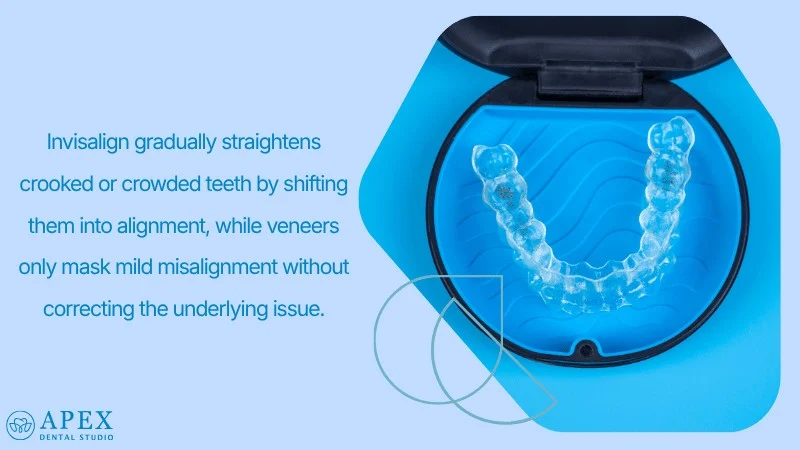
If you have crooked teeth or crowded teeth that overlap, Invisalign treatment focuses on straightening teeth and correcting alignment issues gradually.
The clear aligners apply gentle pressure to move misaligned teeth into better positions over several months.
Crowding happens when your jaw doesn’t have enough space for all your teeth. This causes them to twist, overlap, or push forward and backward.
Invisalign can create the room your teeth need by slowly shifting them into proper alignment.
Veneers don’t actually move your teeth. They can make mildly crooked teeth appear straighter by covering them with perfectly shaped shells.
But if you have significant crowding or misaligned teeth, veneers won’t fix the underlying problem.
Correcting Gaps, Stains, and Chipped Teeth
Gaps between teeth, also called diastema, can be closed with either option. Invisalign physically moves your teeth together to eliminate the space. This takes time but gives you a natural result.
Veneers provide a quicker option for cosmetic improvements like discoloration, chips, or gaps. The thin shells are bonded to your teeth and can instantly mask stained teeth that don’t respond to teeth whitening.
They also cover chipped teeth and fill in small gaps without moving anything.
Porcelain veneers resist staining better than natural enamel. If your main concerns are surface-level issues rather than tooth position, veneers deliver faster visible changes.
Resolving Bite Problems and Malocclusion
Bite problems like overbite, underbite, and crossbite fall under malocclusion. These happen when your upper and lower teeth don’t fit together correctly. Invisalign can treat certain bite problems along with straightening your teeth.
An overbite means your upper front teeth overlap too far over your lower teeth. An underbite is when your lower teeth stick out past your upper teeth. A crossbite occurs when some upper teeth sit inside your lower teeth when you bite down.
Veneers cannot correct these functional issues. They only change how your teeth look from the outside. If you have malocclusion, you need orthodontic treatment to actually move your teeth and jaw into proper alignment.
Who Makes a Good Candidate
Your eligibility for veneers or Invisalign depends on your oral health, age, and specific dental concerns. Some people qualify for just one treatment while others can combine both for better results.
Oral Health Requirements and Pre-Treatment Needs
You need healthy gums and teeth before starting either treatment. If you have gum disease or tooth decay, your cosmetic dentist will treat these problems first.
Invisalign requires good oral hygiene habits since you’ll remove the aligners to eat and clean your teeth. Poor oral health during treatment can lead to cavities and other issues.
Veneers need enough tooth enamel to support the bonding process. Your dentist will remove a small amount of enamel to place the veneers. If you grind your teeth at night, you might damage veneers and need a night guard first.
People with severe bite problems or jaw misalignment typically need orthodontic treatment before getting veneers. Your orthodontist can fix these structural issues with Invisalign.
Adult vs. Teen Patients
Adults and teens can both use Invisalign aligners to straighten their teeth. Teens need fully developed permanent teeth before starting treatment.
Veneers work best for adults over 18 whose teeth have stopped growing. Dentists rarely recommend veneers for teens because their jaw and teeth are still developing. Placing veneers too early can cause problems as the mouth changes shape.
Teens benefit more from orthodontic treatment like Invisalign since it fixes underlying tooth and bite issues during development. Adults with minor cosmetic concerns might prefer veneers for faster results.
Your age affects how long each treatment lasts and your overall dental health timeline.
When to Combine Both Treatments
You can get veneers after Invisalign treatment if you want both straight teeth and cosmetic improvements. Many people choose this path when they have alignment issues plus staining or chips.
Your orthodontist straightens your teeth first with Invisalign. This creates the right foundation for veneers. Once your teeth are aligned, your cosmetic dentist places veneers over them.
This combination works well if you have crooked teeth with permanent discoloration that whitening can’t fix. The Invisalign phase takes 3 to 18 months, then veneers add another 2 to 4 weeks.
Starting with orthodontic treatment gives you better long-term results since your bite will be properly aligned under the veneers.
Treatment Experience, Maintenance, and Results
The day-to-day experience differs significantly between these treatments, from initial discomfort to long-term care requirements. Understanding what each option demands helps you prepare for the commitment ahead.
Comfort, Sensitivity, and Enamel Removal
Invisalign aligners can cause discomfort when you switch to new trays, typically every one to two weeks. You might feel pressure on your teeth and experience some soreness for the first few days of each new aligner.
This pain is temporary and signals that your teeth are moving.
Veneers require enamel removal in most cases, which is permanent and irreversible. Your dentist shaves down a thin layer of your natural tooth structure so the veneers fit properly without looking bulky.
This process can cause tooth sensitivity to hot and cold temperatures that may last several weeks.
Some patients need temporary veneers while waiting for their permanent ones to be made in the lab. These protect your prepared teeth but can feel awkward or fall off if you’re not careful.
Lumineers are a thinner option that may not require enamel removal, though they work best for specific cases.
Daily Care, Retainers, and Longevity
With Invisalign, you’ll wear your aligners 20 to 22 hours daily and remove them only for eating and brushing. You need to clean both your teeth and aligners regularly to prevent staining.
After treatment completes in 3 to 18 months, you must wear retainers indefinitely to maintain veneers.
Porcelain veneers last 10 to 15 years with proper care, while composite veneers typically need replacement after 4 to 8 years. You brush and floss normally, but should avoid biting hard objects that could crack them.
Veneers can stain over time, especially composite ones.
Your natural teeth with Invisalign remain yours forever if you wear your retainer as directed. Veneers will eventually need replacement, adding to the lifetime cost of this cosmetic option.
Costs and Value Considerations
Invisalign treatment ranges from £3,500 to £5,500 for a complete case, treating all your alignment issues at once. This investment corrects orthodontic problems and can improve your bite and oral health long-term.
Veneers cost £100 to £1,000 per tooth depending on the material. A full smile makeover covering 8 to 10 teeth can easily exceed £8,000. Composite veneers sit at the lower end while porcelain costs more but lasts longer.
Consider that veneers need eventual replacement, adding recurring costs throughout your life. Invisalign’s results last permanently with retainer wear.
Some patients combine both treatments, straightening teeth first with aligners then enhancing cosmetic results with veneers. You might also want teeth whitening in Hutto, TX before veneers to match the shade properly.
Making the Right Choice for Your Smile
Your decision between veneers and Invisalign depends on whether you prioritize quick cosmetic fixes or long-term dental alignment, along with factors like budget, timeline, and your overall oral health needs.

Balancing Aesthetics and Oral Health
When deciding between veneers or Invisalign, you need to think about what matters most for your mouth.
Veneers give you instant cosmetic results but don’t fix underlying problems with tooth alignment or bite issues. They cover up problems rather than solve them.
Invisalign takes longer but actually moves your teeth into better positions. This improves how your teeth fit together when you bite and chew.
Straightening teeth with clear aligners can support healthier gums and make it easier to brush and floss properly.
If you have crooked teeth that also show stains or chips, you might need both treatments. Many people get Invisalign first to fix alignment, then add veneers later for a complete smile makeover.
Talk to your dentist about which approach addresses your specific concerns while protecting your long-term dental health.
Key Considerations for Decision-Making
Budget plays a big role in choosing between invisalign or veneers. Invisalign often costs about the same as traditional braces, and your dental insurance might cover up to $3,000 for orthodontic treatment.
Veneers typically cost between $900 and $1,200 per tooth, and insurance rarely covers them since they’re considered cosmetic dentistry.
Timeline matters too. Veneers provide fast cosmetic improvements in just a few weeks, while Invisalign takes months to gradually shift your teeth. Your age and whether your jawbone is still growing can affect which option works best.
Think about permanence as well. Veneers require removing some natural tooth enamel and last 10 to 15 years before needing replacement. Invisalign creates permanent changes to tooth position but doesn’t alter your natural teeth structure.
Frequently Asked Questions
Treatment timelines, costs, and ideal candidates vary significantly between these two smile improvement options. Understanding the practical details helps you make an informed choice.
How long does it usually take to see noticeable results with clear aligners compared to porcelain veneers?
Porcelain veneers deliver immediate results once they’re bonded to your teeth. The entire process typically takes two to three visits over a few weeks.
Clear aligners can show noticeable changes in as little as six months, though complete treatment often takes 12 to 18 months depending on your alignment issues. You’ll wear the aligners 20 to 22 hours daily and switch to new sets every one to two weeks.
If speed is your top priority and you’re mainly concerned with appearance rather than tooth position, veneers are faster. However, aligners provide lasting structural improvements to your bite and tooth alignment.
Which option typically costs more overall, and what factors can change the final price?
Porcelain veneers cost between $900 and $1,200 per tooth on average. If you need six to eight veneers for a full smile makeover, you’re looking at $5,400 to $9,600 or more.
Clear aligner treatment is usually comparable to the cost of braces. Your total price depends on how complex your case is and how many aligners you need.
Insurance coverage makes a big difference in your final cost. Dental insurance may cover up to $3,000 for orthodontic treatment like clear aligners. Veneers are considered cosmetic, so insurance typically doesn’t cover them.
Can you get veneers after finishing clear aligner treatment, and in what situations does that make sense?
Yes, combining both treatments is actually very common. Many patients use clear aligners first to move their teeth into the correct position, then add veneers to specific teeth to fix shape or color issues.
This approach works well when you have both alignment problems and cosmetic concerns. For example, you might straighten crowded teeth with aligners, then place veneers on front teeth that are discolored or chipped.
Using both treatments together often gives you the best results while preserving as much natural enamel as possible. Your dentist can create a treatment plan that addresses all your smile goals in the right order.
What kinds of smile concerns are best corrected with aligners versus veneers (like gaps, crowding, or discoloration)?
Clear aligners treat orthodontic issues like crowded or crooked teeth, spacing between teeth, and certain bite problems. They work by gradually moving your teeth into better positions over time.
Veneers handle cosmetic improvements like chips, cracks, discoloration, and changes to tooth shape or size. They can make slightly crooked teeth appear straighter without actually moving them.
If you have yellow or stained teeth that don’t respond to whitening, veneers are your best option. For gaps caused by tooth position or crowding issues, aligners provide a structural solution.
Why do some dentists recommend avoiding veneers in certain cases, and what are the common downsides?
Veneers require removing a small amount of enamel from your teeth, making this a permanent treatment. You can’t reverse this process or go back to your natural teeth.
Once you have veneers, you’ll need to replace them every 10 to 15 years. This means ongoing maintenance and cost throughout your life.
Dentists may discourage veneers if you have severe alignment issues or bite problems. Covering up these problems with veneers doesn’t fix the underlying structural concerns that could affect your oral health.
Young patients whose teeth are still developing may not be good candidates. Veneers also aren’t ideal if you grind your teeth at night, as this can damage them more quickly.
How do veneers compare to crowns or braces when it comes to durability, maintenance, and long-term results?
Crowns cover your entire tooth, while veneers only cover the front surface. Crowns are stronger and better for teeth with significant damage or large fillings.
Veneers are less invasive than crowns but more permanent than braces or aligners. They preserve more of your natural tooth structure compared to crowns.
Traditional braces and clear aligners actually move your teeth, creating permanent changes to your bite and alignment. Once you finish orthodontic treatment and wear your retainers, your results can last a lifetime.
Veneers resist staining better than natural enamel, but you still need to maintain good oral hygiene. You should avoid biting hard objects and wear a night guard if you grind your teeth.