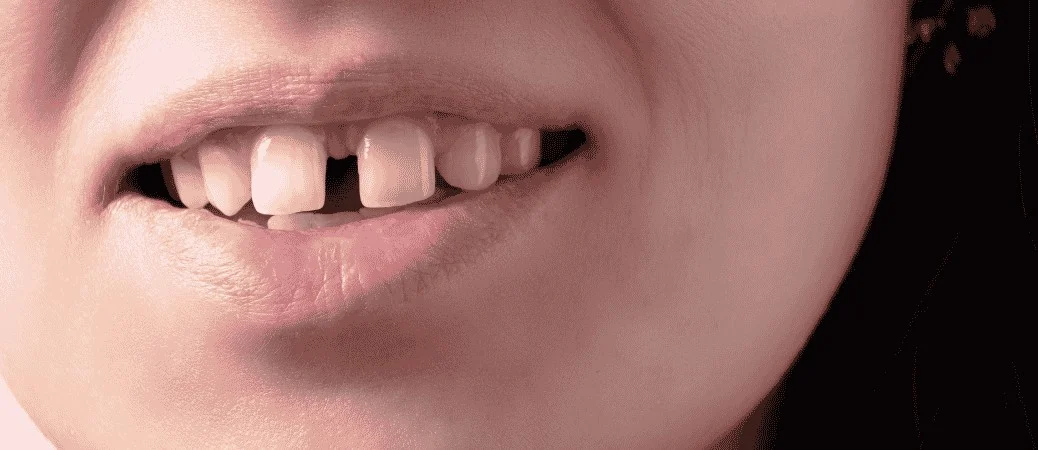
Black triangles between teeth are those small dark spaces you might notice near the gumline, especially on your front teeth.
They can make your smile look older or less even, even when your teeth themselves are perfectly healthy.
If you’ve been searching for a fix, you’ve probably come across two popular options: Bioclear and veneers.
So, can Bioclear really close these gaps without needing veneers? In many cases, yes; Bioclear can fill in black triangle teeth using a tooth-colored material that bonds directly to your existing enamel, so you don’t have to shave down healthy tooth structure the way you would for veneers.
This makes it a gentler, often faster option for people whose main concern is those gaps rather than changing the color or shape of their teeth overall.
If you’re considering Bioclear for black triangles between teeth, understanding why these spaces develop and whether your gums and teeth are suitable for treatment is an important first step.
In this article, you’ll learn what causes black triangles in the first place, how the Bioclear method works step by step, and how it stacks up against traditional bonding and veneers.
You’ll also get a clear picture of who’s a good candidate, what care looks like afterward, and answers to some common questions people ask before booking a cosmetic dentistry visit.
Key Takeaways
- Dark gaps near your gumline are common and usually happen because of gum or bone changes, not unhealthy teeth.
- A gentle bonding technique can often close these gaps in one visit without cutting into your enamel.
- Knowing how this option compares to other treatments can help you and your dentist choose the best long-term fit for your smile.
Table of Content
- Understanding the Dark Gaps Near the Gumline
- Why Black Triangles Develop
- How the Bioclear Method Closes Spaces
- Bioclear, Traditional Bonding, and Veneers Compared
- Candidacy, Care, and Long-Term Expectations
- Frequently Asked Questions
Understanding the Dark Gaps Near the Gumline
Black triangles form for clear reasons, and knowing why they show up can help you understand your treatment options.
These gaps affect your gum health, your smile, and even how food moves around your mouth when you eat.
What Open Gingival Embrasures Are
The dark spaces you see between your teeth have a real name: open gingival embrasures. This just means the small triangle-shaped space near your gumline isn’t filled in the way it should be.
Normally, a small piece of gum tissue called the papilla fills this space. It sits right between two teeth and points up toward your gumline.
When the papilla shrinks or never grows to fill the space, you get a gap. Light passes through this gap and hits the dark inside of your mouth, which is why it looks black instead of pink like your gums.
Your teeth don’t have to be crooked or dirty for this to happen. Even people with straight, healthy teeth can have open gingival embrasures.
Why Food and Plaque Collect in These Spaces
Once a gap forms, it acts like a small pocket that catches things as you eat. Seeds, popcorn hulls, and small food bits can get stuck there and stay put.
This matters because trapped food doesn’t just sit quietly. It breaks down over time and mixes with bacteria in your mouth, leading to plaque buildup right at the gumline.
Plaque that stays in one spot too long can irritate your gums. Over time, this can lead to more gum recession, which makes the black triangle even bigger.
You might notice you’re flossing more in these spots or that food gets stuck there after almost every meal.
This is a normal sign that the space is open enough to trap debris, and it’s worth mentioning to your dentist at your next visit.
How Black Triangles Differ From a Diastema
It helps to know that a black triangle is not the same thing as a diastema. A diastema is a gap between the biting edges of two teeth, usually the front teeth, and you can see it when you smile.
Black triangles sit lower, right at the gumline, and they only show up as a dark triangle shape because of the missing papilla. A diastema is often just open space with no missing tissue involved.
Some people have both diastemas and black triangles at the same time, especially after braces move teeth into new positions. Each one needs a different approach for treatment.
Knowing which gap you have helps guide the right fix, whether that means gum tissue treatment for black triangle closure or a different option made for closing a diastema.
Why Black Triangles Develop
Black triangles usually come from a mix of gum health, tooth shape, and past dental work. Once you know the cause, it’s easier to pick the right fix for your smile.
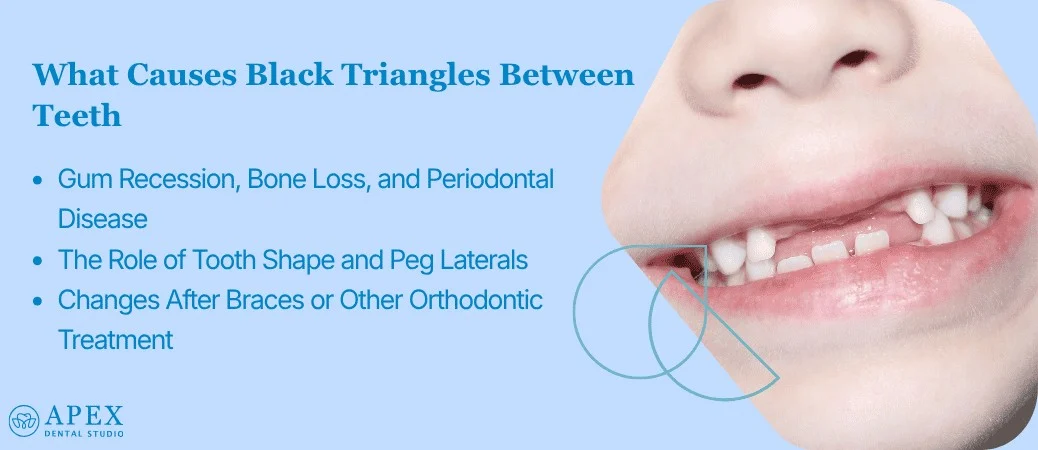
Gum Recession, Bone Loss, and Periodontal Disease
Your gums are supposed to fill the space between your teeth with a small point of tissue called the papilla. When you have gum recession, this tissue pulls back and leaves a gap.
Gingival recession often happens because of gum disease or periodontal disease. These conditions damage the bone that holds your gum tissue in place.
Once you lose bone, your gums can’t fill the space the way they used to. This bone loss is usually permanent, so the gap stays unless you get treatment.
Good periodontal care can help stop the problem from getting worse. But it won’t bring back gum tissue that’s already gone. This is why dentists often check your gum health first.
The Role of Tooth Shape and Peg Laterals
Your tooth shape plays a big role in whether you get black triangles. Teeth that are triangular, with a wider biting edge and a narrower base, tend to touch each other higher up.
This creates more room below the contact point. If your gum tissue doesn’t fully fill that space, a gap forms.
Peg laterals are another common cause. These are small, cone-shaped teeth, usually the ones next to your front teeth. Because they’re narrower than normal teeth, they leave extra space along the sides.
This is one reason peg laterals are often listed as an ideal case for Bioclear treatment.
If your teeth are naturally shaped this way, you may be more likely to notice black triangles, even without gum disease.
Changes After Braces or Other Orthodontic Treatment
Braces and other orthodontic treatment straighten your teeth, but they can also reveal gaps that were hidden before.
When your teeth were crowded, they pressed against each other and made your gums look fuller than they really were.
After tooth movement spreads your teeth apart, that hidden gum loss becomes visible. It’s not that orthodontics caused the damage. It just uncovered a problem that was already there.
Orthodontic movement can also put mild stress on your gum tissue and supporting bone, especially in adults.
Since adult gums don’t heal and regrow as easily as a teenager’s, adults are more likely to notice black triangles once treatment is done.
How the Bioclear Method Closes Spaces
Closing black triangles with the Bioclear Method comes down to three main steps. Your dentist places a special matrix, injects heated composite, and then shapes and polishes everything so it looks like your natural tooth.
The Bioclear Matrix System and Matrix Placement
The Bioclear Matrix System uses thin, clear, curved strips that wrap around your tooth like a mold.
These matrices are shaped to follow the natural curve of your tooth near the gumline, which is exactly where black triangles show up.
Your dentist places the matrix snugly against your tooth and the one next to it. This creates a small pocket for composite material to fill in.
Because the matrix is clear, your dentist can see through it while working. This helps make sure the composite goes exactly where it needs to go.
Good matrix placement is a big part of getting a smooth, natural-looking result.
Heated Flowable Composite and Additive Reshaping
Once the matrix is in place, your dentist injects warmed flowable composite into the space. Heating the composite makes it flow more easily, so it fills every part of the mold without air bubbles or gaps.
This step is what makes Bioclear an additive treatment. Instead of drilling into your tooth, your dentist adds tooth-colored composite resin to build up the missing area. Your healthy enamel stays untouched.
The composite bonds directly to your tooth. As it fills in the space, your tooth gets a slightly broader shape near the gumline.
This is what closes the gap where the black triangle used to be. Dr. David Clark, who created this technique, designed it so dentists could treat these gaps without cutting away tooth structure.
Finishing and Polishing for Natural Contours
After the composite hardens, your dentist removes the matrix and checks the shape of your new composite restoration. Small adjustments may be needed to match the curve of your other teeth.
Then comes finishing and polishing. Your dentist uses fine polishing tools to smooth the edges and blend the composite bonding with your natural tooth.
A well-polished composite bonding job should feel smooth to your tongue, with no rough spots or ridges. The goal is for the new contour to look like it was always part of your smile, not something added on.
Bioclear, Traditional Bonding, and Veneers Compared
Each option fixes black triangles in a different way, and your choice depends on how much of your natural tooth you want to keep, your budget, and how long you want the results to last.
Here’s how Bioclear, traditional bonding, and veneers stack up against each other.


When Bioclear Is a Conservative Choice
Bioclear is a good fit when you want to keep as much of your natural enamel as possible.
Unlike some other cosmetic treatments, Bioclear typically requires little to no enamel removal, so your dentist can shape composite around your existing tooth structure.
This makes it a popular choice if you only have black triangles or small gaps and your teeth are otherwise healthy.
It’s also more budget-friendly than porcelain veneers, since Bioclear costs less than veneers but slightly more than basic bonding due to the specialized materials and training involved.
You’ll also get better stain resistance with Bioclear than with regular composite bonding. If you like the idea of a smile makeover without cutting into your teeth, this option is worth asking your dentist about.
Where Traditional Bonding May Be Less Predictable
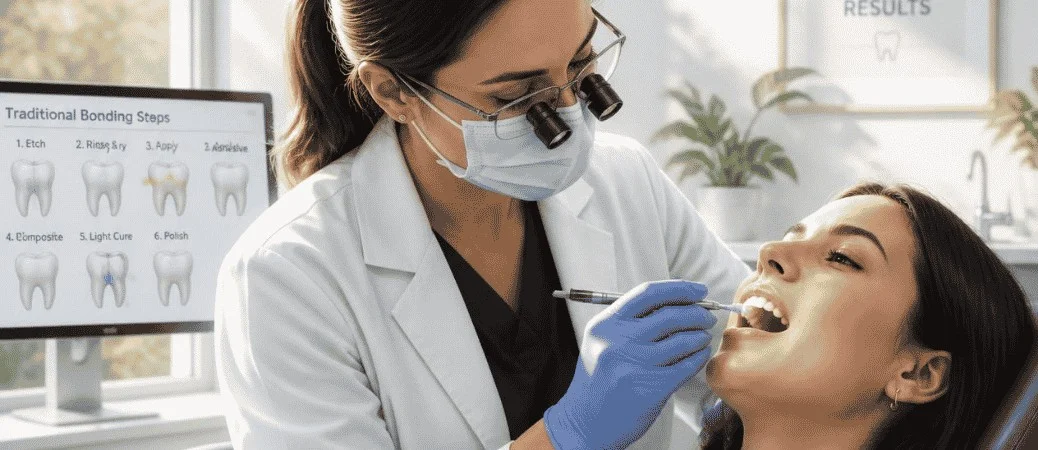
Traditional bonding can work well for small chips or minor imperfections, but it has some limits when it comes to black triangles.
The composite material used in regular bonding tends to stain more easily over time compared to Bioclear, especially if you drink coffee, tea, or red wine often.
Shaping bonding material into a smooth, natural-looking curve near the gumline can also be tricky. Your dentist has to freehand the shape, which means results can vary depending on skill and technique.
If the gap is close to your gum line, Bioclear may create a smoother, more natural shape between teeth than traditional bonding can achieve.
Bonding also tends to chip more easily than other options, so you may need touch-ups sooner.
When Porcelain Veneers or Crowns May Be Better
Porcelain veneers or crowns might be the better call if your teeth have more going on than just black triangles.
If you’re also dealing with deep discoloration, major misalignment, or teeth that are worn down significantly, veneers can address multiple issues at once.
Veneers and crowns typically require more enamel removal than Bioclear, since your dentist needs to prep the tooth surface first.
This makes the process less conservative, but it can also provide a more dramatic, longer-lasting transformation for a full smile makeover.
If you’re looking for one solution to fix several cosmetic concerns at the same time, porcelain veneers or crowns are worth discussing with your cosmetic dentistry provider.
At Apex Dental Studio, our team can evaluate your teeth, gums, and cosmetic goals to help determine whether Bioclear, veneers, crowns, or another approach makes the most sense for your smile.
Candidacy, Care, and Long-Term Expectations
Not everyone with black triangles is ready for treatment right away, and your results depend a lot on how you care for your teeth afterward. Here’s what you need to know before and after getting your gaps closed.

Why Healthy, Stable Gums Come First
Before you get any black triangle closure, your dentist needs to check your gum health.
Active gum disease has to be treated first. If your gums are inflamed or infected, adding composite material to your teeth won’t fix the real problem. It could even trap more bacteria underneath.
Your dentist will look for signs of stable periodontal care, like healthy pink tissue and no bleeding when you brush. If bone loss caused your black triangles, you may need a periodontist to check things out too.
Once your gums are calm and healthy, the shape of the restoration has a much better chance of lasting. Skipping this step is one of the biggest reasons cosmetic work fails later on.
Daily Cleaning and Flossing Around Restorations
Good oral hygiene doesn’t stop once your black triangles are closed. It actually becomes more important.
You’ll still need to brush twice a day and floss daily, just like you did before treatment. The good news is that flossing often gets easier once the gaps are gone, since there’s no jagged edge to catch the floss on.
A composite restoration has a smooth, glass-like surface that resists plaque buildup better than rougher materials. But it’s not stain-proof or immune to neglect.
Skipping flossing can still lead to plaque buildup right where the material meets your gum line. Staying consistent with your routine protects both your smile and your gum health long term.
What to Discuss During a Cosmetic Consultation
A good cosmetic consultation covers more than just how your smile will look.
Ask your dentist how they plan to handle your specific gaps, and whether your case is a good fit based on tooth shape, spacing, and gum position.
You should also ask about the expected lifespan of the material and how stain resistance holds up over time with your diet and habits.
Bring up any past dental work, current oral health concerns, or grinding habits, since these can affect the outcome.
It also helps to ask what kind of maintenance schedule they recommend, including how often you’ll need checkups to keep the polish looking smooth.
At Apex Dental Studio, founder Dr. Andy Tran, is a Kois Center graduate and takes a comprehensive approach to evaluating your smile before recommending cosmetic treatment.
This means looking beyond the visible gaps to determine whether Bioclear or another option is better suited to your teeth, gums, bite, and cosmetic goals.
A clear, honest conversation upfront helps set realistic expectations for how your results will hold up for years to come.
Frequently Asked Questions
Here are answers to common questions you might have about black triangles, how Bioclear works, and what your options are for treatment.
Can Bioclear fix black triangles between teeth?
Yes, Bioclear can close many black triangles between your teeth. It works by adding tooth-colored composite around your teeth using special clear molds.
This method fills the gap without removing any of your natural teeth. Many patients see their black triangles closed in a single visit.
What is the best treatment for black triangles between teeth?
The best treatment depends on your specific case. If your teeth are healthy and you just want to close small gaps, Bioclear is often a great choice because it’s simple and doesn’t require cutting your teeth.
But if you have other concerns too, like changing the color or shape of several teeth, porcelain veneers might fit your goals better. Your dentist can help you figure out which option makes the most sense for your smile.
How much does Bioclear bonding for black triangles cost?
The cost of Bioclear bonding can vary based on your location, how many teeth need treatment, and your dentist’s fees. Since pricing differs from office to office, it’s best to ask your dentist for a personalized quote.
Many patients find that Bioclear costs less than veneers since it’s a less involved procedure. Talking with your dentist directly will give you the clearest picture of what to expect.
Can black triangles between teeth be fixed without veneers?
Yes, you don’t need veneers to fix black triangles. Bioclear is a popular alternative that closes gaps without shaving down your teeth.
This makes it appealing if you want to keep as much of your natural tooth as possible. It’s especially useful for isolated black triangle closure where you don’t need bigger changes to your smile.
Why do black triangles appear after braces or Invisalign?
Black triangles often show up after orthodontic treatment because moving your teeth can shift how they fit together. When your teeth line up straighter, tiny gaps near the gumline can become more noticeable.
Your gum tissue and bone levels also play a role in this. In some cases, black triangles are caused by orthodontic treatment itself, along with other factors like tooth shape or gum recession.
Can I prevent black triangles from forming between my teeth?
You can’t always prevent black triangles completely, since some causes (like gum and bone levels) are outside your control. But keeping your gums healthy through good brushing and flossing habits can help.
Regular dental checkups also let your dentist catch changes early. If you’re getting braces or Invisalign, ask your orthodontist how your treatment plan might affect the spaces between your teeth.